
Send airflow, pollutant type, material preference, voltage and destination. PureAirTek will recommend suitable industrial equipment and quote range.
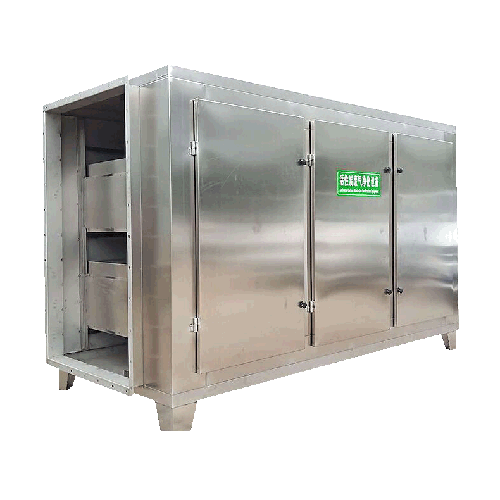
An activated carbon adsorption box removes suitable low-concentration VOCs and odor compounds by passing exhaust through activated carbon media. It is often used for paint booths, printing exhaust, packaging lines, laboratory ventilation, chemical storage rooms and odor polishing. The equipment is simple to operate, but it must be protected from dust, oil mist, paint mist and high humidity to keep the carbon bed effective.
| Condition | Recommendation | Reason |
| Low-concentration VOC or odor | Suitable | Activated carbon can adsorb many organic compounds when the bed is sized correctly. |
| Paint mist or sticky particles | Needs dry filter box first | Paint mist blocks the carbon surface and shortens replacement cycle. |
| High humidity exhaust | Review carefully | Water vapor can reduce adsorption capacity for some VOCs. |
| High concentration solvent exhaust | Consider RCO, RTO or concentration system | Carbon replacement cost and safety risk may become too high. |
A reliable adsorption system usually follows this path: collection hood, ductwork, dry filter or mist removal, activated carbon adsorption box, fan and exhaust stack. For spray painting, the dry filter box is not optional; it protects the carbon from paint mist. For chemical or printing exhaust, solvent composition, concentration and operating schedule should be checked before deciding carbon volume and replacement cycle.
| Parameter | What to Confirm | Why It Matters |
| Airflow | Total exhaust volume and operating hours | Determines box size, carbon bed area and pressure drop. |
| VOC composition | Solvent names and concentration range | Different VOCs have different adsorption performance and safety limits. |
| Pretreatment | Dust, oil mist, paint mist or water mist present? | Decides filter box, demister or scrubber before carbon. |
| Carbon type | Honeycomb, granular or column carbon | Affects pressure drop, capacity and replacement method. |
| Replacement plan | How often can carbon be checked and replaced? | Prevents breakthrough and odor complaints. |
Provide airflow, VOC or odor source, solvent names, approximate concentration, temperature, humidity, dust or mist content, operating hours, expected emission target, installation space and destination country. PureAirTek can then recommend whether a single carbon box, a dry filter plus carbon system, or a combined RCO/RTO solution is more appropriate.
Contact:
Phone:
Email: sales@pureairtek.com
Add:
We chat