Flour Dust Collection Solutions
Introduction
Food processing facilities handle flour, sugar, starch, grains, spices, milk powder, cocoa powder and many other dry ingredients that can create airborne dust. This guide explains flour dust capture from milling, mixing, bag dumping, conveying, weighing and packaging operations for B2B buyers, food factory owners, distributors, engineering contractors and procurement managers.
A food dust collection system must do more than remove visible dust. It should support sanitation, worker comfort, product recovery, housekeeping, combustible dust control and long-term maintenance. PureAirTek designs industrial dust collection systems that match the production process, not only the airflow number on a quotation.
For international buyers, the key questions are practical: how does the equipment work, which collector type is suitable, how can operating cost be reduced, how can filter life be improved and what problems should be prevented before installation?
Industry Background
Food factories create dust during ingredient receiving, bag dumping, pneumatic conveying, milling, sieving, mixing, blending, drying, coating, filling and packaging. Fine powders can spread quickly through a production room, settle on equipment and increase cleaning labor. In some cases, food dust can also be combustible, making dust accumulation a safety concern.
General ventilation is not enough for most food powder applications. It may dilute airborne dust but does not capture powder at the source. Local extraction near bag dumping stations, mixers, mills and filling machines is usually more effective because it removes dust before it spreads.
PureAirTek evaluates food dust projects by process layout, dust type, moisture behavior, cleaning requirements, explosion risk, airflow demand and discharge method. A flour mill, bakery, sugar packing line and spice blending facility may all need different dust collection details.
| Food Process | Dust Source | Collection Focus | Buyer Concern |
|---|---|---|---|
| Bag dumping | Flour, starch, sugar, spices | Local hood or dump station | Operator exposure and housekeeping |
| Mixing | Ingredient turbulence | Balanced extraction | Product loss and dust clouds |
| Milling | Fine grain or flour dust | High-load filtration | Combustible dust risk |
| Packaging | Filling and weighing dust | Point capture | Clean product presentation |
Equipment Working Principle
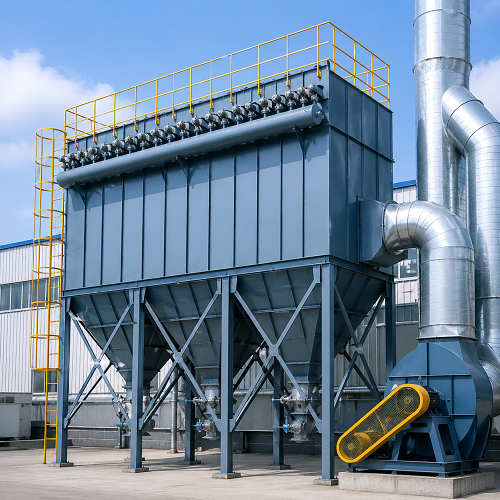
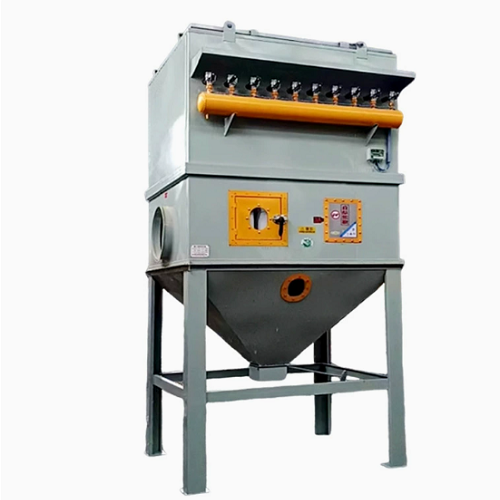
A food processing dust collection system captures dust-laden air near the source and transports it through ducts into a dust collector. Inside the collector, filter cartridges or filter bags separate powder from air. Cleaned air is exhausted or returned only when local rules and food safety practices allow it.
Cartridge collectors are often used for fine dry ingredient dust where compact equipment is needed. Baghouse collectors are suitable for larger systems or heavier dust loading. Pulse jet cleaning removes dust cake from the filters to keep airflow stable during production.
Food dust collectors also need practical discharge design. Collected powder should be removed without creating a secondary dust cloud. Sealed bins, rotary valves or screw conveyors may be used depending on dust volume and plant layout.
| Specification | Typical Option | Why It Matters |
|---|---|---|
| Airflow | 1,000-80,000+ m3/h | Matches number of pickup points |
| Filter media | Polyester, PTFE membrane, antistatic | Controls efficiency and dust release |
| Collector type | Cartridge or baghouse | Depends on dust load and footprint |
| Discharge | Sealed bin, rotary valve, screw conveyor | Prevents dust leakage |
| Safety | Grounding, antistatic media, explosion venting | Needed for combustible dust |
Technical Specifications
Food dust collector specifications should be based on ingredient type, particle size, dust loading, moisture, airflow, number of pickup points, operating hours, cleaning requirement and safety review. Buyers should also define whether the system needs stainless steel, coated steel, sanitary access, antistatic media or explosion protection.
Fan sizing should include duct pressure loss, filter pressure drop and future dust loading. Undersized fans cause poor capture, while oversized fans waste energy and may disturb powder handling operations. PureAirTek reviews airflow and pressure together to reduce lifecycle cost.
| Condition | Recommended Direction | Reason |
|---|---|---|
| Fine dry flour or sugar | Cartridge collector with antistatic media | Compact and efficient |
| Heavy dust loading | Baghouse dust collector | Handles large dust cake |
| Combustible dust | Explosion-protected system | Reduces ignition event impact |
| Sanitation priority | Cleanable housing and sealed discharge | Supports hygiene procedures |
Selection Guide
The first selection step is identifying the dust. Flour and sugar are fine and may be combustible. Spice dust may carry odor and can be sticky. Starch can blind filters if moisture is present. Grain dust may have high loading and require durable filtration.
The second step is defining source capture. Bag dumping stations, mixers, mills and filling machines should have pickup points designed around real dust release. Treating the entire room with a large fan is less efficient than capturing dust at the source.
The third step is sanitation and maintenance. Food plants need equipment that operators can inspect, empty and clean. If the collector is difficult to access, filters and bins may not be maintained on schedule.
Application Industries
Food dust collection applies to flour mills, bakeries, sugar processing, snack food production, spice blending, grain handling, dairy powder processing, cocoa processing, supplement production and packaging lines. Each application has different powder behavior and safety requirements.
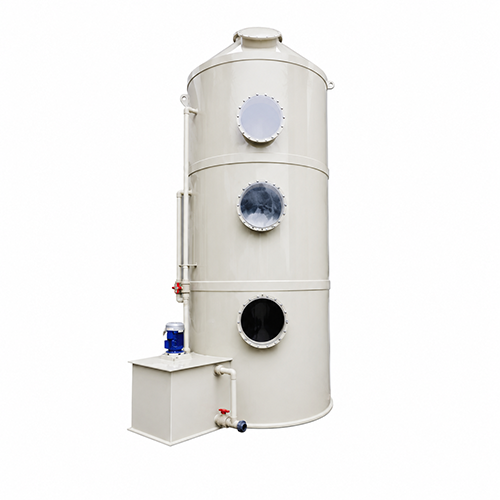
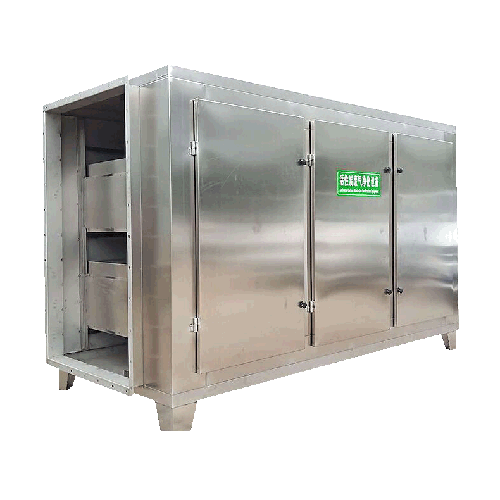
Some food factories also need odor or VOC treatment from cooking, coating, cleaning or chemical processes. PureAirTek can combine cartridge dust collectors, baghouse dust collectors, activated carbon adsorbers, spray tower scrubbers and other air pollution control equipment when multiple exhaust problems exist.
Advantages and Benefits
A well-designed food dust collection system improves production cleanliness, reduces housekeeping labor, captures valuable ingredient dust and helps prevent dust accumulation. It also supports a better working environment for operators near dumping, mixing and packaging stations.
Operating cost is controlled by proper airflow, suitable filter media, stable pulse cleaning and easy discharge. A low-price collector can become expensive if filters clog quickly or if operators spend extra time cleaning powder from floors and machines.
| Benefit | Business Value | Requirement |
|---|---|---|
| Cleaner production area | Less cleaning labor | Effective source capture |
| Lower product loss | Improved ingredient yield | Correct hood design |
| Better air quality | Improved worker environment | Stable filtration |
| Safety support | Reduced dust accumulation | Combustible dust review |
Installation Considerations
Installation should start with a dust source survey. Engineers should map bag dumping points, mixers, mills, conveyors, packaging machines, duct routes, collector location and discharge handling. Duct velocity should prevent settling without excessive pressure loss.
For combustible dust, explosion protection must be reviewed. Depending on the dust and local requirements, the system may need grounding, antistatic media, explosion vents, isolation valves or safe outdoor venting. Food factories should also avoid dust accumulation on beams, platforms and hidden surfaces.
Maintenance access is essential. Operators need safe access to filters, pulse valves, hoppers, bins, dampers and fans. The collector should be placed where service can be done without disrupting production more than necessary.
Maintenance Guide
Maintenance should include pressure drop checks, filter inspection, compressed air review, dust bin emptying, hopper inspection and grounding checks. Rising pressure drop may indicate moisture, sticky dust or weak pulse cleaning. Dust leakage may indicate damaged filters or poor seals.
Food plants should also align dust collector cleaning with sanitation schedules. Operators should have clear procedures for emptying bins and replacing filters without releasing dust back into the production area.
| Maintenance Item | Frequency | Purpose |
|---|---|---|
| Pressure drop check | Daily or weekly | Tracks filter condition |
| Dust bin emptying | By production load | Prevents overflow |
| Filter inspection | Scheduled service | Prevents leakage |
| Grounding check | Routine safety schedule | Supports combustible dust control |
Common Problems and Solutions
Dust escape at bag dumping stations is often caused by poor hood position or low capture velocity. High pressure drop may be caused by filter blinding, moisture or excessive dust load. Hopper bridging can happen when sticky ingredients build up in the discharge section.
PureAirTek recommends comparing current readings with commissioning records. If pressure drop, airflow or production load changed, the root cause can usually be found faster.
| Problem | Likely Cause | Solution |
|---|---|---|
| Dust escapes at dumping station | Low capture velocity | Improve hood and airflow |
| High pressure drop | Blinded filters or moisture | Review media and humidity |
| Dust in clean outlet | Filter damage or seal leak | Inspect cartridge and gasket |
| Hopper bridging | Sticky ingredient dust | Improve discharge and cleaning |
Practical Industrial Example
A bakery may have flour dust around mixing and bag dumping areas. The existing room fan moves air but does not capture dust at the release point. A local dump station hood and compact cartridge collector can reduce dust clouds and cleaning labor.
A sugar packaging plant may need a more safety-focused approach. Fine sugar dust can be combustible, so antistatic media, grounding, venting and isolation may be reviewed before equipment selection. The best system balances capture efficiency, sanitation and safety.
Detailed Buyer Checklist
Before buying food grade dust collection equipment, buyers should define ingredient type, dust load, moisture, particle size, combustible dust information, sanitation requirement, production schedule, discharge method and available space. These details affect collector type, filter media, fan size, duct design and safety options.
The quotation should clearly show airflow, pressure drop, filter area, media type, fan power, cleaning method, discharge design, material, access doors and safety features. PureAirTek recommends comparing lifecycle cost rather than choosing only by purchase price.
| Buyer Checklist | Question | Impact |
|---|---|---|
| Dust type | Is it flour, sugar, starch, spice or grain? | Determines media and safety design |
| Moisture | Will dust become sticky? | Affects filter blinding |
| Explosion risk | Is combustible dust testing available? | Defines protection requirements |
| Sanitation | How will the unit be cleaned? | Controls material and access design |
Commissioning and Cost Control
Commissioning should record airflow by pickup point, system pressure drop, fan current, pulse pressure, discharge condition and operator training. These values create the baseline for future troubleshooting and maintenance planning.
Operating cost includes fan energy, compressed air, filter replacement, cleaning labor, downtime and spare parts. Correct source capture can reduce total airflow and save energy while improving dust control.
| Acceptance Record | Target | Use |
|---|---|---|
| Airflow by pickup | Meets design | Confirms capture |
| Pressure drop | Baseline range | Future troubleshooting |
| Fan current | Normal load | Energy and mechanical check |
| Discharge condition | No leakage | Housekeeping and hygiene |
Internal Links for Topic Cluster
Related product pages: Cartridge Dust Collectors, Baghouse Dust Collectors, Industrial Air Pollution Control Equipment.
Related application pages: Food Processing Dust Collection, Chemical Industry Dust Collection, Pharmaceutical Dust Collection.
Related knowledge articles: How Does a Cartridge Dust Collector Work?, Dust Collector Maintenance Checklist, Dust Collection System Pressure Loss Calculation.
Food Plant Engineering Review and Risk Control
A food dust collection project should begin with a walk-through of the actual production line. The engineering team should observe when dust is released, whether operators open bags manually, whether ingredient transfer is continuous or batch-based, and whether dust clouds appear only during certain production steps. This practical observation often reveals problems that are not visible on a layout drawing.
Sanitation should be included in equipment selection. Internal ledges, difficult corners, poor access doors and open discharge bins can create cleaning problems. A food processing dust collector should be easy to inspect, empty and maintain. If the factory uses wet cleaning near the collector, moisture control and corrosion resistance should be reviewed carefully.
Combustible dust risk should not be ignored. Flour, sugar, starch and grain dust may present explosion hazards under the right conditions. The buyer should check whether dust testing data is available and whether local codes require venting, isolation, antistatic filter media or special electrical classification. PureAirTek recommends reviewing safety requirements before equipment fabrication.
Production flexibility also matters. A plant may process flour in the morning and spice powder in the afternoon, or it may switch between different particle sizes and moisture levels. The dust collector should be selected for the most difficult realistic condition, not only the easiest product. A system that works for dry flour may struggle with sticky seasoning powder if filter media and cleaning logic are not suitable.
Good duct design reduces operating cost. Short, direct ducts with balanced pickup points reduce fan power and improve capture. Long duct runs, excessive bends and poorly adjusted dampers can increase pressure loss and make one pickup point strong while another remains weak. During commissioning, each branch should be checked and balanced.
Additional Practical Scenario
A flour blending plant may have dust at several bag dumping points. If all points are connected to one large duct without balancing dampers, the closest station may receive too much airflow while the farthest station still releases dust. The solution may be duct balancing, hood adjustment and fan review rather than simply buying a larger dust collector.
A sugar packaging line may experience filter pressure rise during humid weather. The issue may not be fan capacity; sugar dust can become sticky when moisture increases. The solution may include better humidity management, filter media review, more frequent discharge checks and improved housekeeping around the filling machine.
Documentation and Supplier Evaluation
When comparing suppliers, buyers should request more than a general quotation. A professional proposal should include airflow by pickup point, estimated pressure drop, collector type, filter area, media selection, fan power, cleaning method, discharge design, maintenance access and safety options. If combustible dust is involved, the proposal should clearly explain which safety items are included and which require local code review.
Dongguan Kelong Environmental Technology Co., Ltd. supports PureAirTek projects with manufacturing experience for industrial dust collection and air pollution control equipment. For food processing buyers, this means the project can be discussed from both equipment manufacturing and practical plant operation perspectives.
FAQ Section
1. What dust collector is best for food factories?
The best choice depends on dust type, dust loading, moisture, footprint and safety requirements. Cartridge collectors are common for fine dry dust, while baghouse collectors suit larger or heavier systems.
2. Is flour dust combustible?
Flour dust can be combustible under certain conditions. Food factories should review dust explosibility and choose safety features accordingly.
3. How can food factories reduce cleaning labor?
Capture dust at the source, maintain airflow, empty bins on schedule and use proper filter media. Local extraction is usually more effective than general ventilation.
4. Can collected food powder be reused?
Reuse depends on the plant's food safety and quality procedures. Many systems focus on clean removal and disposal rather than reuse.
5. What causes filter blockage?
Moisture, sticky dust, wrong media, high dust loading or weak pulse cleaning can block filters. Pressure trend records help identify the cause.
6. What information does PureAirTek need for a quote?
PureAirTek needs ingredient type, process layout, airflow, dust load, moisture, operating hours, sanitation needs and safety requirements.
Conclusion
Flour Dust Collection Solutions requires careful review of dust source, powder behavior, sanitation, combustible dust risk, filtration media and maintenance access. A reliable system improves cleanliness, air quality, productivity and long-term operating cost.
PureAirTek provides cartridge dust collectors, baghouse dust collectors and complete industrial air pollution control equipment for food processing, milling, bakery, sugar and packaging applications.
Request a Quote CTA
Contact PureAirTek with your food process, dust type, airflow, production layout and dust control target to request a customized proposal. Dongguan Kelong Environmental Technology Co., Ltd. can support equipment manufacturing and engineering documentation for global food processing dust collection projects.
Request a Quote from PureAirTek for food grade dust collection systems, cartridge collectors, baghouse collectors and complete industrial air pollution control equipment.