
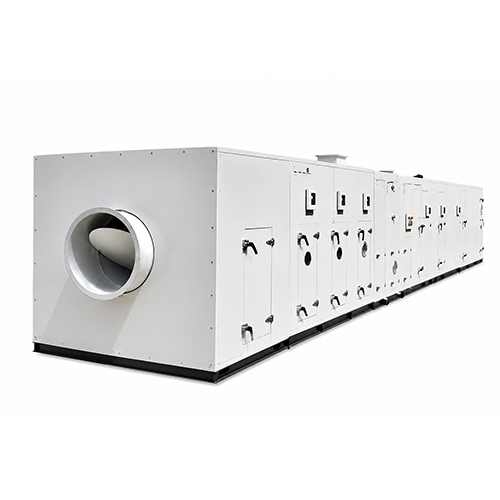
Send airflow, pollutant type, material preference, voltage and destination. PureAirTek will recommend suitable industrial equipment and quote range.
A zeolite rotor concentrator with catalytic oxidizer treats large-volume, low-concentration VOC exhaust by adsorbing VOCs onto a rotating zeolite wheel, desorbing them into a smaller hot air stream, and sending the concentrated stream to an RCO catalytic oxidizer. This layout is used when direct RCO would be too large or too fuel-intensive for the original airflow.
| Application | Typical Exhaust | Why This System Fits |
| Large spray coating lines | High airflow with low to medium VOC concentration | Concentration reduces the air volume entering the catalytic oxidizer. |
| Printing and packaging workshops | Solvent VOC with long operating hours | Rotor concentration can reduce operating energy compared with treating all airflow directly. |
| Electronics or precision manufacturing | Clean exhaust with trace VOC | Works when dust and mist are controlled before the rotor. |
| Automotive component coating | Large booth ventilation volume | Useful when capture airflow is much larger than VOC mass flow. |
This system is not ideal for exhaust with heavy dust, paint mist, high humidity, high boiling-point resin, silicone, tar, strong acid or alkaline mist, or VOC components that do not adsorb well on zeolite. It also needs stable safety design because the desorption stream has higher VOC concentration than the original exhaust.
The process normally includes capture hood, ductwork, dry filter or pre-filter, zeolite rotor adsorption zone, desorption hot air system, concentration fan, RCO catalytic oxidizer, heat exchanger, main fan, control system and stack. Paint booth exhaust should pass through multi-stage filtration before reaching the rotor.
| Parameter | What to Confirm | Design Impact |
| Total airflow | Original exhaust volume and fluctuation | Determines rotor size and main fan pressure. |
| VOC concentration | Average, peak and LEL percentage | Determines concentration ratio and RCO sizing. |
| VOC composition | Solvent names and boiling point range | Determines zeolite adsorption suitability and desorption temperature. |
| Pretreatment | Paint mist, dust, oil mist or moisture present? | Protects rotor channels and catalyst from blockage or poisoning. |
| Operating hours | Continuous or batch production | Controls heat recovery economics and maintenance planning. |
Prepare airflow, VOC composition, concentration range, temperature, humidity, dust or mist condition, operating hours, emission target, installation space, voltage and destination. Photos of the process and duct layout help PureAirTek decide whether zeolite rotor plus RCO is better than direct RCO, RTO or activated carbon.
Contact:
Phone:
Email: sales@pureairtek.com
Add:
We chat
