Send airflow, pollutant type, material preference, voltage and destination. PureAirTek will recommend suitable industrial equipment and quote range.
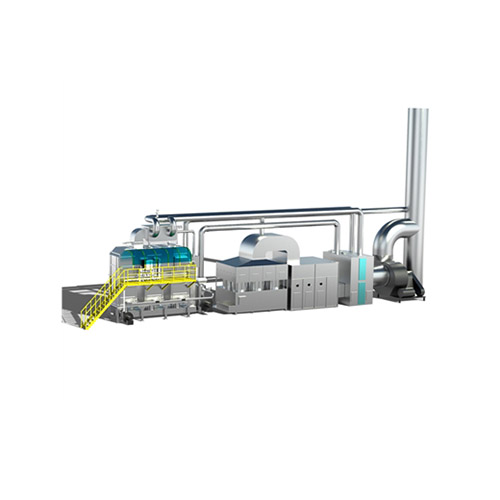
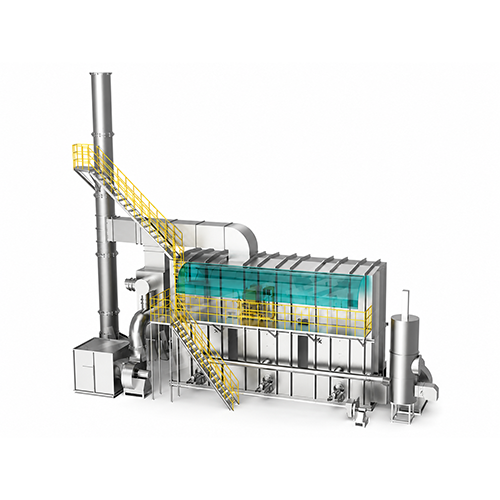
A zeolite rotor concentrator with RTO is used for large airflow and low-concentration VOC exhaust where treating the full air volume directly with an RTO would be oversized and energy intensive. The zeolite wheel concentrates VOCs into a smaller desorption stream, and the RTO thermal oxidizer destroys the concentrated VOCs with high-temperature oxidation and ceramic heat recovery.
| Application | Typical Exhaust | Why Rotor + RTO Fits |
| Automotive and industrial coating | Large booth airflow with low VOC mass loading | Concentration reduces RTO size while keeping destruction performance. |
| Printing and packaging | Mixed solvent exhaust from multiple lines | RTO handles a broad VOC mix when pretreatment and safety are correct. |
| Electronics manufacturing | Clean ventilation with trace VOC | Suitable when dust and moisture are controlled before the rotor. |
| Large workshop ventilation | Diluted solvent exhaust | Separates air volume problem from VOC mass treatment. |
Rotor plus RTO should not be used without careful review when exhaust contains heavy dust, oil mist, paint mist, silicone, tar, high humidity, strong corrosive gases, or VOC compounds that are hard to adsorb or create corrosive oxidation byproducts. Small intermittent exhaust may be more economical with activated carbon or direct RCO.
A typical system includes capture hood, ductwork, dry filtration or mist removal, zeolite rotor adsorption and desorption zones, desorption heater, concentration fan, RTO oxidation chamber, ceramic heat recovery beds, switching valves, safety interlocks, main fan and stack. The pretreatment stage protects both the rotor and the RTO.
| Parameter | What to Confirm | Design Impact |
| Airflow | Total exhaust flow and future expansion | Determines rotor diameter, fan pressure and duct layout. |
| VOC concentration | Average and peak concentration | Determines concentration ratio, RTO load and LEL safety margin. |
| VOC composition | Solvent names, boiling point and corrosive elements | Determines adsorption suitability and RTO material considerations. |
| Pretreatment | Dust, paint mist, oil mist, humidity or acid gas | Decides filter box, scrubber or demister before the rotor. |
| Operating schedule | Continuous, shift-based or intermittent | Impacts energy savings and start-stop strategy. |
Send airflow, VOC composition, concentration range, temperature, humidity, dust or mist condition, operating hours, emission target, fuel or power availability, installation space and destination country. PureAirTek can compare rotor + RTO with direct RTO, rotor + RCO, RCO and activated carbon options.
Contact:
Phone:
Email: sales@pureairtek.com
Add:
We chat