Pulse Jet Baghouse Dust Collector
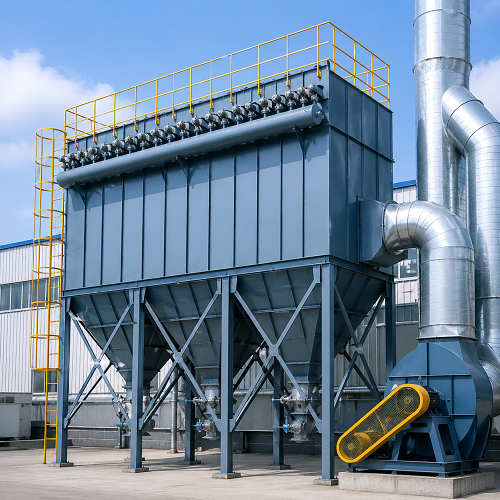
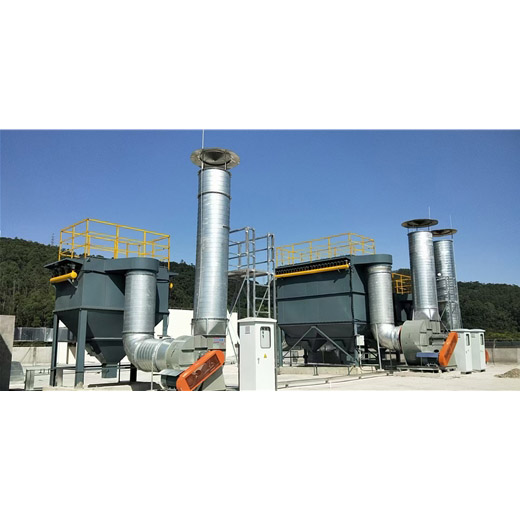
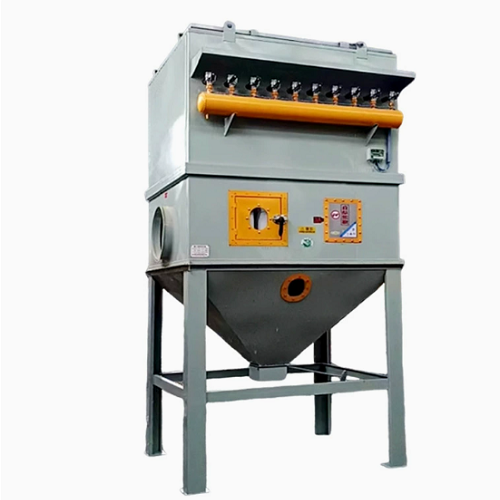
A pulse jet baghouse is built for continuous dry-dust collection where the collector must keep filtering while its bags are cleaned. It is commonly considered for powder transfer, mineral processing, foundry work, cement, woodworking, biomass, chemical powders and other applications with sustained dust loading.
When pulse-jet cleaning is the right direction
Pulse-jet cleaning uses short bursts of compressed air to dislodge the dust cake from filter bags. This makes it suitable where airflow demand is continuous and taking sections offline for cleaning is not practical. The collector still needs to be matched to the dust: moist, fibrous, sticky, abrasive or combustible material may require different inlet design, filter media, hopper geometry or safety controls.
Design the system around the dust source
| Design input | Why it affects the baghouse |
|---|---|
| Airflow and simultaneous machines | Sets fan duty, bag area and duct branch sizing. |
| Dust loading and particle behavior | Influences inlet separation, air-to-cloth ratio and hopper discharge. |
| Temperature and moisture | Guide fabric selection and condensation prevention. |
| Dust chemistry | Determines media finish, corrosion considerations and safety review. |
| Operating schedule | Defines cleaning frequency, compressed-air demand and control strategy. |
Configuration options
- Modular chamber arrangement for different airflow ranges and access requirements.
- Filter bags and cages selected for dust temperature, particle size and chemical environment.
- Pulse valves, air header and controls sized for reliable cleaning cycles.
- Hopper, rotary valve, screw conveyor or collection bin for a continuous dust-discharge path.
- Optional differential-pressure monitoring, PLC control, access platforms and weather protection.
Installation and operation points
Keep the collector accessible for bag replacement and hopper service. Compressed air should be clean and dry; poor air quality shortens valve and bag-cleaning performance. The fan, ductwork and collector should be commissioned together by checking hood capture, branch balance, pressure drop and dust discharge under actual production.
Information for a quotation
Please provide material handled, dust characteristics, airflow range, temperature, moisture, machine list, operating hours, available installation space, electrical standard and any combustible-dust assessment. This creates a design basis instead of a one-size-fits-all baghouse proposal.