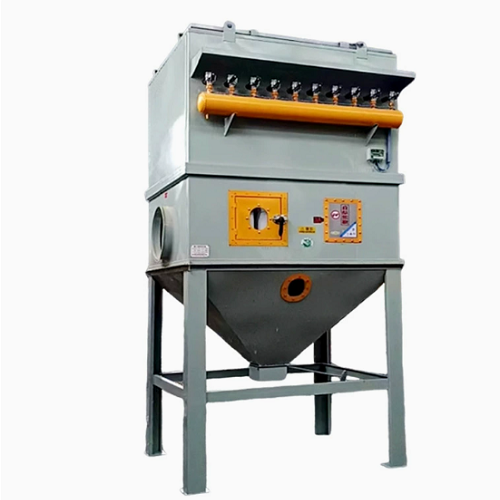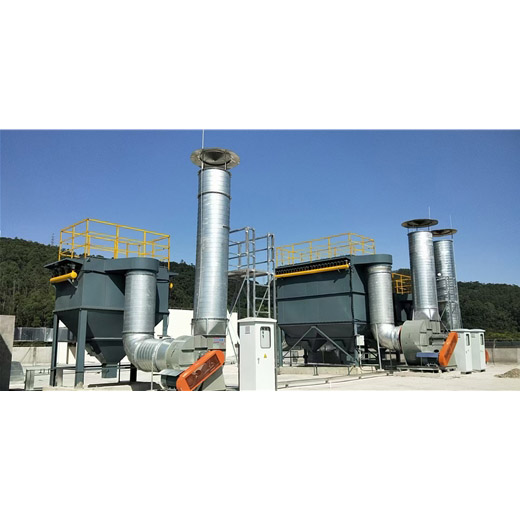
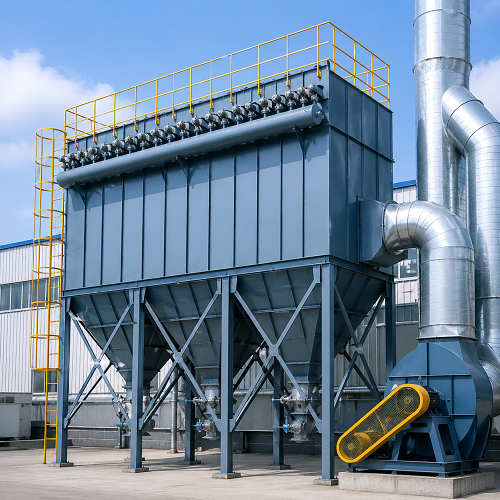
Reverse Air Baghouse Dust Collector
A reverse air baghouse cleans filter bags by temporarily reversing the airflow through an isolated compartment. It is a compartment-style solution for dry industrial dust collection where gentle bag cleaning, long bag life and process-specific airflow management are important.
How reverse-air cleaning differs from pulse jet
Pulse-jet collectors clean bags with short compressed-air pulses and generally continue filtering across the collector. A reverse-air design uses controlled reverse flow in a cleaning compartment. The cleaning approach, compartment arrangement and filtration velocity should be selected for the process rather than treated as interchangeable equipment names.
Applications to evaluate
- Dry powder and mineral processes with established baghouse operating practices.
- Continuous industrial exhaust where compartment isolation can be accommodated.
- Applications where the dust, media and cleaning method benefit from lower-intensity bag flexing.
Suitability depends on dust properties, process continuity, temperature, moisture, corrosive constituents and available footprint. Dust that is sticky, wet or prone to bridging needs particular attention to hopper and media selection.
Key design decisions
| Component | Selection question |
|---|---|
| Bag fabric | Can it withstand the process temperature, chemistry and cleaning method? |
| Compartment count | Can required airflow continue while a compartment is cleaned? |
| Inlet and hopper | Will coarse material separate and discharge without re-entrainment or bridging? |
| Fan and duct system | Does the pressure-drop budget cover hoods, duct runs and filter condition? |
| Controls | Are cleaning sequence, damper operation and pressure monitoring defined? |
Operation and maintenance
Monitor differential pressure, inspect bags/cages and verify that dust leaves the hopper continuously. Maintain access to compartments, clean-air plenum, fan and discharge equipment. The collector is only one part of the system: poor hood capture or unbalanced ducts cannot be corrected by choosing a larger baghouse body.
Request a project-specific recommendation
Share dust material, airflow, temperature, moisture, source layout, simultaneous operating points, required outlet condition and site constraints. A good proposal will state the selected media, filtration area, cleaning sequence, fan duty, pressure-drop basis and included accessories.