Send airflow, pollutant type, material preference, voltage and destination. PureAirTek will recommend suitable industrial equipment and quote range.
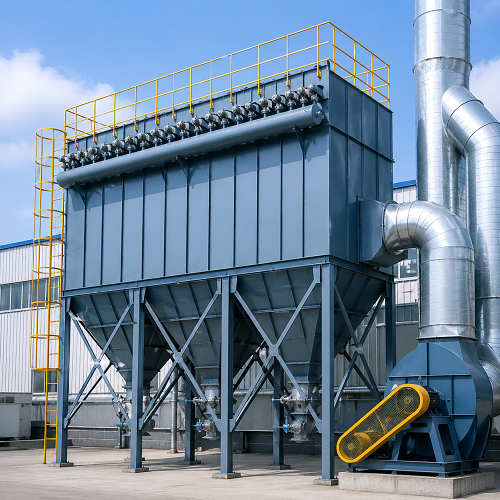
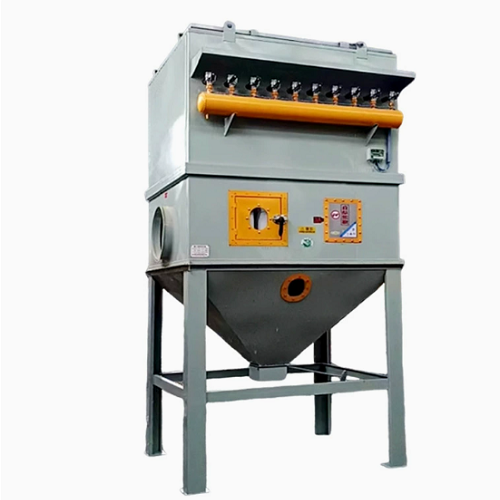
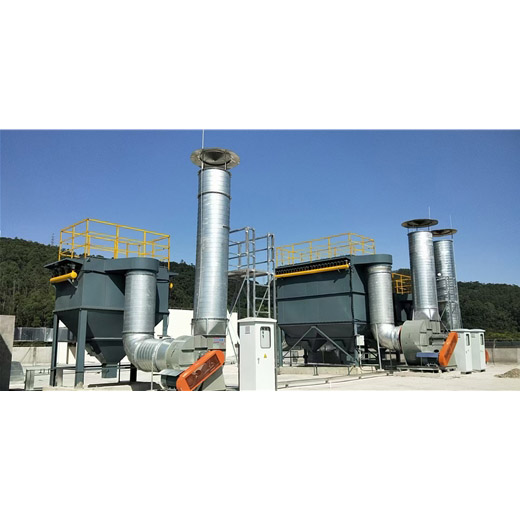
A baghouse dust collector is a heavy-duty filtration system for factories with large airflow, high dust loading or continuous production. Dust-laden air enters the collector, particles are captured on fabric filter bags, and clean air is discharged through the outlet. Pulse-jet or reverse-air cleaning removes dust from the bags so the system can operate for long production shifts.
| Scenario | Dust Character | Reason to Use Baghouse |
| Woodworking and furniture plants | Wood chips, sanding dust and mixed particle sizes | Handles larger dust volume and centralized duct systems. |
| Mineral, cement and ceramic powder | High dust concentration and abrasive particles | Large filter area and robust hopper discharge support continuous operation. |
| Foundry and metal processing | Sand dust, oxide dust and process fumes | Can be configured with high-temperature media and dust discharge equipment. |
| Bulk material transfer | Dust from conveyors, silos and mixers | Stable for high loading where cartridges may block too quickly. |
The right baghouse is not selected by airflow alone. Air-to-cloth ratio, dust loading, inlet design, hopper angle, cleaning pressure, filter bag material and dust discharge method all affect performance. A low-cost unit with insufficient filter area may run at high pressure drop, overload the fan and shorten filter bag life.
| Item | Selection Question | Design Impact |
| Airflow | How many collection points and what hood velocity are required? | Defines collector size, duct diameter and fan power. |
| Dust loading | Is the dust light, heavy, abrasive, hot or combustible? | Determines bag media, inlet protection and cleaning intensity. |
| Filter media | Polyester, PTFE membrane, antistatic or high-temperature media? | Affects emission level, bag life and safety. |
| Discharge | Dust drawer, hopper, rotary valve or screw conveyor? | Determines maintenance workload and continuous operation ability. |
| Safety | Any combustible dust or spark source? | May require explosion venting, isolation or spark detection. |
If the workshop has fine dry dust, moderate dust load and limited space, a cartridge dust collector may be more compact. If the process creates heavy dust loading, large central airflow or abrasive powder, a baghouse usually gives more stable long-term operation.
Send airflow, dust type, temperature, moisture, process source, operating hours, discharge method, emission target, installation space, voltage and destination. If the dust may be combustible, provide the material safety information and local safety requirement before final design.
Contact:
Phone:
Email: sales@pureairtek.com
Add:
We chat