Dust Collection Requirements for Furniture CNC Machines
Introduction
Dust Collection Requirements for Furniture CNC Machines is a serious engineering question for furniture manufacturers. Wood dust affects machine reliability, sanding quality, coating quality, worker comfort, housekeeping cost, combustible dust risk and customer audit results. A furniture factory may buy a collector that looks powerful, but if airflow, duct velocity, filter area and discharge design are wrong, the system will not protect production.
PureAirTek writes this guide for B2B buyers, distributors, factory owners, contractors and procurement teams. The goal is to explain how to select dust collection equipment based on real furniture production conditions instead of catalog shortcuts. PureAirTek and Dongguan Kelong Environmental Technology Co., Ltd. support international industrial air pollution control projects where equipment must match the workshop layout and long-term operating cost.
Industry Background
Furniture manufacturing uses CNC routers, panel saws, drilling centers, edge banders, moulders, wide belt sanders, manual sanding benches and finishing preparation rooms. These processes release mixed chips, MDF powder, particleboard dust, solid wood shavings and fine sanding dust. As production speed increases, dust generation becomes continuous and a small local collector is rarely enough.
Professional furniture factories need clean panels before coating and packaging. Dust that settles on surfaces can increase rework. Dust that enters motors, electrical cabinets or CNC guide rails can create maintenance issues. Fine dust also raises worker exposure and combustible dust concerns, so system design must include capture, transport, filtration, discharge, monitoring and maintenance.
Equipment Working Principle
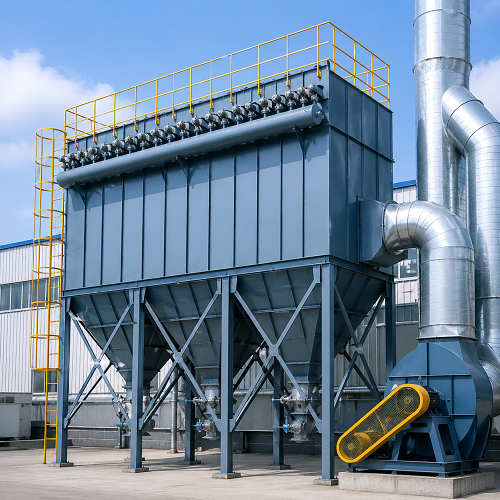
A furniture dust collection system captures dust at the machine hood or dust port, transports it through ductwork, separates heavy chips when needed, filters fine dust and discharges collected material into a safe container. The fan creates negative pressure. The duct network must maintain enough transport velocity to keep dust moving. The collector must provide enough filter area to keep pressure drop stable.
In a furniture plant operating three nested CNC routers with automatic tool changers and vacuum tables, the working principle must be converted into a project design. A CNC hood, a sanding bench and an edge bander port do not need the same airflow pattern. A centralized system can serve them together only when branches are balanced and simultaneous operation is calculated.
Technical Specifications
| Item | Furniture Factory Design Range |
|---|---|
| Airflow | 5,000-150,000 m3/h depending on machine quantity and simultaneous operation |
| Duct velocity | 18-25 m/s for most wood chips and mixed dust |
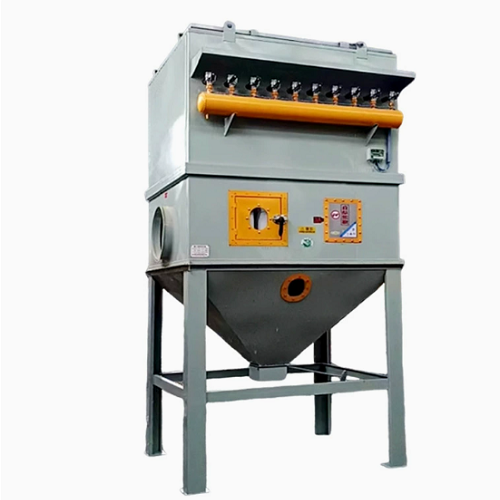
| Collector type | Cyclone plus baghouse, cartridge collector, or centralized hybrid system |
| Filter media | Polyester needle felt, anti-static felt, pleated cartridges or PTFE membrane |
| Discharge | Rotary valve, screw conveyor, sealed bin, bagging unit or briquetting connection |
| Controls | Differential pressure gauge, pulse controller, VFD fan, interlocks and blast gates |
| Safety | Grounding, spark control, anti-static media, explosion venting or isolation when required |
Selection Guide
Selection starts with the production map. List every machine, port size, dust type, operating hours, duct distance and whether it runs with other machines. Then define which dust sources are coarse chips and which are fine powder. Heavy chip sources may need cyclone pre-separation. Sanding and MDF dust may need finer media and conservative filtration velocity.
Compare suppliers by design airflow, filter area, fan static pressure, duct assumptions, control logic and maintenance access. A lower price is not a better value if it causes weak suction, rapid filter replacement or high power consumption.
| Buyer Question | Recommendation | Reason |
|---|---|---|
| Which machines run together? | Use simultaneous airflow calculation. | Prevents undersized or oversized systems. |
| What dust is produced? | Match cyclone, baghouse or cartridge media to chip and fine dust load. | Protects filters and capture efficiency. |
| Is expansion likely? | Reserve duct branches and fan capacity. | Furniture factories often add CNC or sanding equipment. |
| Is dust combustible? | Review housekeeping, grounding and explosion protection. | Fine wood dust can be hazardous. |
Application Industries
This topic applies to panel furniture, cabinet production, wardrobes, office furniture, solid wood tables, chairs, doors, millwork, flooring, school furniture and export furniture plants. Each application uses different machines but faces the same need for stable dust capture.
Advantages and Benefits
Cleaner production and less dust on finished panels.
Better sanding, coating and packaging quality.
Reduced cleaning labor and fewer operator complaints.
Longer filter life through correct pre-separation and media.
Lower energy cost when VFD and machine interlocks are used.
Improved combustible dust management and maintenance planning.
Installation Considerations
Install collectors where filter doors, dust bins, valves and electrical panels can be reached safely. Keep duct runs as short and smooth as practical. Seal joints, support ducts and avoid unnecessary elbows. Outdoor collectors need weather protection. Explosion vent direction and isolation should be reviewed before installation if combustible dust risk exists.
Maintenance Guide
Record differential pressure, suction at important machines, fan current, dust bin level, pulse cleaning pressure and visible leaks. Empty bins before overfilling. Check ducts for settlement. Label blast gates. Recalculate airflow when new machines are added. Replace filters based on pressure trend and dust condition, not only calendar time.
Common Problems and Solutions
| Problem | Cause | Solution |
|---|---|---|
| Weak suction | Open unused gates, duct blockage or low fan pressure | Balance branches and inspect ductwork |
| High pressure drop | Loaded filters, wet dust or full hopper | Check pulse air, discharge and media |
| Dust on products | Poor hood capture or sanding room leakage | Improve hood position and airflow |
| High power cost | Fan runs full speed during partial production | Use VFD and interlocks |
| Short filter life | No pre-separation or wrong media | Add cyclone and select correct filters |
| Safety concern | Fine dust deposits and ignition sources | Improve housekeeping and review protection |
Practical Industrial Example
For a furniture plant operating three nested CNC routers with automatic tool changers and vacuum tables, PureAirTek would request machine data, port sizes, layout and production schedule. Related PureAirTek resources include Baghouse Dust Collectors, Cartridge Dust Collectors, Cyclone Dust Collectors, Industrial Exhaust Fans, Dust Collection Systems for Woodworking Shops, Dust Collection for Sanding Operations and How to Calculate Airflow for Woodworking Dust Collection.
How to Reduce Operating Costs
Reduce cost by using correct airflow, avoiding unnecessary fan speed, selecting proper media, separating heavy chips before final filters and making maintenance easy. Energy, filters, downtime and labor are all part of total ownership cost.
FAQ
1. What information is needed for a quote?
Machine list, port sizes, layout, dust type, working schedule, power supply and installation location.
2. Is a centralized system better?
For medium and large plants, centralized systems usually offer cleaner layout and better airflow control.
3. Can cartridge collectors handle furniture dust?
Yes for fine dust or compact systems, but heavy chips often need pre-separation.
4. How can airflow be reduced without losing suction?
Use VFD control, automatic blast gates and machine interlocks.
5. How often should filters be replaced?
Use pressure trends, emissions and inspection rather than only calendar time.
6. Is wood dust explosive?
Fine wood dust can be combustible, so risk review and housekeeping are important.
Conclusion
Dust Collection Requirements for Furniture CNC Machines requires coordinated engineering across capture hoods, ducts, collectors, fans, controls and maintenance. PureAirTek helps furniture manufacturers build dust collection systems that support cleaner production and lower long-term operating cost.
Request a Quote CTA
Contact PureAirTek, supported by Dongguan Kelong Environmental Technology Co., Ltd., for a furniture dust collection quotation. Send your machine list, port sizes and workshop layout for a practical equipment recommendation.
Buyer note: a professional quotation should state airflow basis, filter area, fan static pressure, duct assumptions, discharge method and service access. These details help furniture manufacturers compare suppliers and avoid systems that cannot maintain suction under full production load.
Buyer note: a professional quotation should state airflow basis, filter area, fan static pressure, duct assumptions, discharge method and service access. These details help furniture manufacturers compare suppliers and avoid systems that cannot maintain suction under full production load.
Buyer note: a professional quotation should state airflow basis, filter area, fan static pressure, duct assumptions, discharge method and service access. These details help furniture manufacturers compare suppliers and avoid systems that cannot maintain suction under full production load.
Buyer note: a professional quotation should state airflow basis, filter area, fan static pressure, duct assumptions, discharge method and service access. These details help furniture manufacturers compare suppliers and avoid systems that cannot maintain suction under full production load.
Buyer note: a professional quotation should state airflow basis, filter area, fan static pressure, duct assumptions, discharge method and service access. These details help furniture manufacturers compare suppliers and avoid systems that cannot maintain suction under full production load.
Buyer note: a professional quotation should state airflow basis, filter area, fan static pressure, duct assumptions, discharge method and service access. These details help furniture manufacturers compare suppliers and avoid systems that cannot maintain suction under full production load.
Buyer note: a professional quotation should state airflow basis, filter area, fan static pressure, duct assumptions, discharge method and service access. These details help furniture manufacturers compare suppliers and avoid systems that cannot maintain suction under full production load.
Buyer note: a professional quotation should state airflow basis, filter area, fan static pressure, duct assumptions, discharge method and service access. These details help furniture manufacturers compare suppliers and avoid systems that cannot maintain suction under full production load.
Buyer note: a professional quotation should state airflow basis, filter area, fan static pressure, duct assumptions, discharge method and service access. These details help furniture manufacturers compare suppliers and avoid systems that cannot maintain suction under full production load.
Buyer note: a professional quotation should state airflow basis, filter area, fan static pressure, duct assumptions, discharge method and service access. These details help furniture manufacturers compare suppliers and avoid systems that cannot maintain suction under full production load.
Buyer note: a professional quotation should state airflow basis, filter area, fan static pressure, duct assumptions, discharge method and service access. These details help furniture manufacturers compare suppliers and avoid systems that cannot maintain suction under full production load.
Buyer note: a professional quotation should state airflow basis, filter area, fan static pressure, duct assumptions, discharge method and service access. These details help furniture manufacturers compare suppliers and avoid systems that cannot maintain suction under full production load.
Buyer note: a professional quotation should state airflow basis, filter area, fan static pressure, duct assumptions, discharge method and service access. These details help furniture manufacturers compare suppliers and avoid systems that cannot maintain suction under full production load.
Buyer note: a professional quotation should state airflow basis, filter area, fan static pressure, duct assumptions, discharge method and service access. These details help furniture manufacturers compare suppliers and avoid systems that cannot maintain suction under full production load.
Buyer note: a professional quotation should state airflow basis, filter area, fan static pressure, duct assumptions, discharge method and service access. These details help furniture manufacturers compare suppliers and avoid systems that cannot maintain suction under full production load.
Buyer note: a professional quotation should state airflow basis, filter area, fan static pressure, duct assumptions, discharge method and service access. These details help furniture manufacturers compare suppliers and avoid systems that cannot maintain suction under full production load.
Buyer note: a professional quotation should state airflow basis, filter area, fan static pressure, duct assumptions, discharge method and service access. These details help furniture manufacturers compare suppliers and avoid systems that cannot maintain suction under full production load.
Buyer note: a professional quotation should state airflow basis, filter area, fan static pressure, duct assumptions, discharge method and service access. These details help furniture manufacturers compare suppliers and avoid systems that cannot maintain suction under full production load.
Buyer note: a professional quotation should state airflow basis, filter area, fan static pressure, duct assumptions, discharge method and service access. These details help furniture manufacturers compare suppliers and avoid systems that cannot maintain suction under full production load.
Buyer note: a professional quotation should state airflow basis, filter area, fan static pressure, duct assumptions, discharge method and service access. These details help furniture manufacturers compare suppliers and avoid systems that cannot maintain suction under full production load.
Buyer note: a professional quotation should state airflow basis, filter area, fan static pressure, duct assumptions, discharge method and service access. These details help furniture manufacturers compare suppliers and avoid systems that cannot maintain suction under full production load.
Buyer note: a professional quotation should state airflow basis, filter area, fan static pressure, duct assumptions, discharge method and service access. These details help furniture manufacturers compare suppliers and avoid systems that cannot maintain suction under full production load.
Buyer note: a professional quotation should state airflow basis, filter area, fan static pressure, duct assumptions, discharge method and service access. These details help furniture manufacturers compare suppliers and avoid systems that cannot maintain suction under full production load.
Buyer note: a professional quotation should state airflow basis, filter area, fan static pressure, duct assumptions, discharge method and service access. These details help furniture manufacturers compare suppliers and avoid systems that cannot maintain suction under full production load.
Buyer note: a professional quotation should state airflow basis, filter area, fan static pressure, duct assumptions, discharge method and service access. These details help furniture manufacturers compare suppliers and avoid systems that cannot maintain suction under full production load.
Buyer note: a professional quotation should state airflow basis, filter area, fan static pressure, duct assumptions, discharge method and service access. These details help furniture manufacturers compare suppliers and avoid systems that cannot maintain suction under full production load.
Buyer note: a professional quotation should state airflow basis, filter area, fan static pressure, duct assumptions, discharge method and service access. These details help furniture manufacturers compare suppliers and avoid systems that cannot maintain suction under full production load.
Buyer note: a professional quotation should state airflow basis, filter area, fan static pressure, duct assumptions, discharge method and service access. These details help furniture manufacturers compare suppliers and avoid systems that cannot maintain suction under full production load.
Buyer note: a professional quotation should state airflow basis, filter area, fan static pressure, duct assumptions, discharge method and service access. These details help furniture manufacturers compare suppliers and avoid systems that cannot maintain suction under full production load.
Buyer note: a professional quotation should state airflow basis, filter area, fan static pressure, duct assumptions, discharge method and service access. These details help furniture manufacturers compare suppliers and avoid systems that cannot maintain suction under full production load.
Buyer note: a professional quotation should state airflow basis, filter area, fan static pressure, duct assumptions, discharge method and service access. These details help furniture manufacturers compare suppliers and avoid systems that cannot maintain suction under full production load.
Buyer note: a professional quotation should state airflow basis, filter area, fan static pressure, duct assumptions, discharge method and service access. These details help furniture manufacturers compare suppliers and avoid systems that cannot maintain suction under full production load.