Dust Collection Solutions for Furniture Manufacturing Plants
Introduction
Dust Collection Solutions for Furniture Manufacturing Plants is a practical engineering topic for furniture manufacturers, not a general housekeeping idea. Dust in a furniture plant affects CNC uptime, sanding quality, coating quality, worker comfort, electrical cabinet cleanliness, customer audit results and the long-term operating cost of the factory. Buyers who choose a dust collector only by motor power often discover later that suction is weak at distant machines or filters plug too quickly.
PureAirTek prepares this guide for B2B industrial buyers, furniture factory owners, distributors, engineering contractors and procurement managers who need professional manufacturer-level guidance. The article explains how to match dust characteristics, airflow, ductwork, collector type, filter media, fan pressure, controls and maintenance access to real furniture manufacturing conditions.
The focus of this article is complete furniture plant dust control from panel cutting to finishing preparation. It is written for international markets where buyers expect technical clarity, practical examples, SEO-ready structure and a supplier who understands both equipment and production workflow.
Industry Background
Furniture manufacturing has become faster, cleaner and more automated. Modern plants use CNC routers, panel saws, edge banders, drilling centers, moulders, wide belt sanders, polishing stations and finishing preparation rooms. These machines create different dust types: coarse chips from cutting, shavings from solid wood machining, fine MDF powder from routing and very fine dust from sanding.
A furniture plant usually cannot solve dust with one portable collector placed beside one machine. As production expands, dust control becomes a system issue. Duct velocity, branch balancing, filter area, dust discharge and operator habits all affect performance. Poor design leads to dust settling in ducts, visible dust on panels, high differential pressure and unstable suction.
PureAirTek and Dongguan Kelong Environmental Technology Co., Ltd. support industrial air pollution control projects where dust collection must work together with factory layout, machine operation and maintenance routines. For furniture manufacturers, the ob jective is cleaner production with reasonable energy consumption and manageable filter cost.
Equipment Working Principle
A furniture dust collection system begins at the source. Hoods, machine ports, downdraft tables or sanding booths capture dust before it spreads into the workshop. Contaminated air moves through ductwork at a transport velocity high enough to prevent dust settlement. In high-chip applications, a cyclone or drop-out separator removes heavy material before the final filter collector.
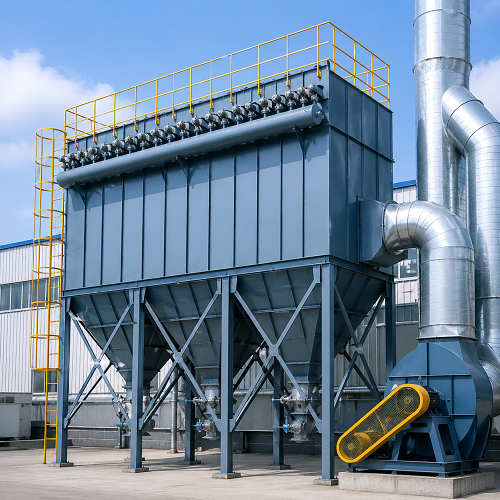
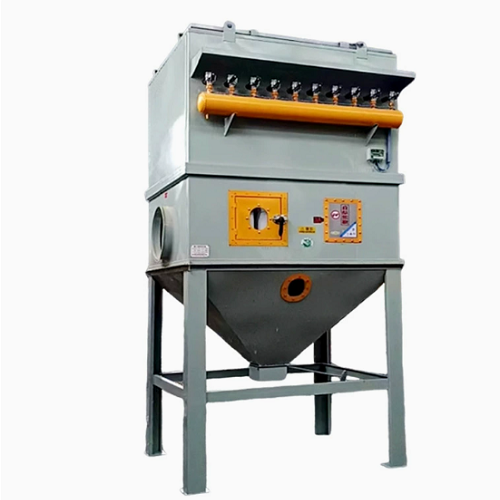
The collector then separates dust from air through filter bags or pleated cartridges. Pulse-jet cleaning or mechanical cleaning releases dust cake from the filter surface into a hopper. The fan provides negative pressure for the entire system, and the discharge device sends collected dust into a bin, sealed bag, screw conveyor, rotary valve or briquetting system.
For a 12,000 m2 export furniture plant with panel saws, CNC routers, edge banders, boring machines, wide belt sanders and manual repair sanding booths, the working principle must be translated into a real airflow plan. Every open branch consumes air. Every elbow adds pressure loss. Every dust type affects filter loading. A professional proposal should therefo re include airflow basis, filter area, fan static pressure and dust discharge design.
Technical Specifications
| Specification Item | Typical Furniture Plant Recommendation |
|---|---|
| Recommended system type | Centralized dust collection with cyclone pre-separation and baghouse or cartridge final filtration, depending on dust loading |
| Typical airflow range | 5,000-150,000 m3/h for furniture plants, calculated by machine ports and simultaneous operation |
| Duct transport velocity | Usually 18-25 m/s for chips, shavings and mixed wood dust; verify for each branch and material |
| Filter media | Polyester needle felt, anti-static needle felt, pleated cartridge media or PTFE membrane for fine sanding dust |
| Pre-separation | Cyclone, drop-out box or spark separator recommended before final filters in high-chip lines |
| Dust discharge | Rotary valve, screw conveyor, sealed bin, dust bagging station, briquetting connection or container discharge |
| Control system | Differential pressure monitoring, VFD fan control, pulse cleaning, machine interlocks and optional automatic blast gates |
| Safety options | Grounding, anti-static media, spark detection, explosion venting or isolation after project risk review |
Specifications are meaningful only when they are linked to dust type and production schedule. A collector that handles chips from panel saws may not be ideal for fine sanding dust. A system that works for one CNC router may fail after two additional machines are connected without recalculating airflow.
Selection Guide
Start selection with a machine list. Record machine type, dust port diameter, required airflow, operating schedule, dust material, duct distance and whether each machine runs at the same time as others. Then define the main dust categories: MDF powder, particleboard dust, solid wood shavings, sanding dust, edge banding trim dust or mixed dust.
The next step is equipment selection. Large centralized furniture plants often use cyclone pre-separation plus a baghouse dust collector. Fine dust zones may benefit from cartridge filtration or dedicated local collectors. A VFD fan, automatic dampers and machine interlocks can reduce operating cost when only part of the plant is running.
| Decision Factor | Option A | Option B |
|---|---|---|
| Buyer Question | Professional Recommendation | Why It Matters |
| Which machines operate together? | Calculate simultaneous airflow by real production schedule. | Prevents undersized suction and oversized fan energy. |
| Is dust coarse or fine? | Use cyclone pre-separation for chips and finer media for sanding or MDF dust. | Protects filters and improves capture efficiency. |
| Will production expand? | Reserve duct branches, fan margin and control capacity. | Furniture plants commonly add CNC, sanding or edge banding lines. |
| Is combustible du st present? | Review ignition sources, housekeeping, grounding and explosion protection. | Fine wood dust requires safety planning. |
Application Industries
Furniture dust collection applies to panel furniture manufacturing, cabinet production, wardrobe factories, office furniture plants, solid wood furniture factories, door and window production, upholstered furniture frame shops, flooring plants, millwork workshops and export furniture manufacturing facilities. Each industry has different dust volume and quality requirements.
Panel furniture plants usually focus on MDF and particleboard dust from CNC routing, panel cutting, edge banding and drilling. Solid wood plants handle larger shavings and chips from planers, moulders and saws. Finishing departments require very clean air because airborne dust can affect coating quality and rewo rk rate.
Advantages and Benefits
Cleaner production areas with less dust on machines, panels and finished products.
Improved worker comfort and reduced manual cleaning time.
Better coating and finishing quality by reducing airborne sanding dust.
More stable suction when ductwork and branch control are designed correctly.
Lower filter replacement cost through correct media and pre-separation.
Reduced fan energy with VFD control and machine interlocks.
Improved combusti ble dust management through better capture, discharge and housekeeping.
Installation Considerations
Installation should consider collector location, duct routing, service access, dust discharge, noise, electrical safety and fire protection. The collector should be placed where workers can empty bins and service filters without blocking production. Ducts should be sealed, supported and routed with minimal sharp turns. Outdoor equipment may require weather protection and corrosion-resistant construction.
In furniture plants, installation also needs coordination with machine layout. CNC routers need flexible hose and moving hood allowances. Edge banders have several small ports that must be balanced. Sanding rooms may require booth or bench capture near the operator breathing zone. PureAirTek reviews layout drawings before finalizing system recommendations.
Maintenance Guide
Maintenance teams should record differential pressure, fan current, suction at critical machines, dust bin level, pulse cleaning pressure and visible dust leakage. Dust bins must be emptied before overfilling because overfilled hoppers increase pressure drop and can push dust back toward filters. Blast gates should be labeled so operators know which branches should remain open.
Filter replacement should be based on pressure trends and dust conditions, not only calendar time. If pressure rises quickly, check moisture, pulse valves, compressed air quality, blocked ducts and dust discharge. If suction drops suddenly, inspect open unused branches, fan belts, duct leaks and collector inlet blockage.
Common Problems and Solutions
| Problem | Likely Cause | Practical Solution |
|---|---|---|
| Weak suction at machines | Unbalanced branches, blocked duct, open unused blast gates or low fan static pressure | Measure airflow, close unused gates, inspect ducts and review fan curve |
| High differential pressure | Filter loading, wet dust, pulse failure or full dust bin | Check compressed air, clean discharge and review filter media |
| Dust settling in ducts | Transport velocity too low or duct diameter incorrect | Recalculate duct velocity and rebalance branches |
| Visible dust in workshop | Poor hood capture or leaking access doors | Improve hood design and inspect seals |
| High operating cost | Fan runs at full speed during partial production | Use VFD and machine interlock control |
| Combustible dust concern | Fine dust accumulation and ignition sources | Improve housekeeping and review explosion protection options |
Practical Industrial Example
In a 12,000 m2 export furniture plant with panel saws, CNC routers, edge banders, boring machines, wide belt sanders and manual repair sanding booths, a buyer may receive several quotations with similar equipment names but very different performance assumptions. PureAirTek would ask for the machine list, port sizes, duct layout, production schedule and dust discharge requirement before recommending a collector. The goal is to prevent an under-sized system that looks inexpensive but fails when production is running at full load.
Relevant PureAirTek product and knowledge resources include Baghouse Dust Collectors, Cartridge Dust Collectors, Cyclone Dust Collectors, Industrial Exhaust Fans, Dust Collection Systems for Woodworking Shops, Dust Collection for Sanding Operations, How to Calculate Airflow for Woodworking Dust Collec tion and Wood Dust Explosion Prevention Guide.
How to Reduce Operating Costs
Operating cost is controlled through correct airflow, filter area, pre-separation and fan control. A system that moves too little air creates dust escape. A system that moves too much air wastes electricity. VFD control, automatic blast gates and machine interlocks help match airflow to actual production demand.
Filter cost can be reduced by separating heavy chips before final filtration, keeping dust dry, maintaining pulse cleaning and using the correct media for sanding or MDF dust. Maintenance cost falls when access doors, bins and pr essure gauges are easy to use. A well-designed dust collection system pays back through fewer complaints, less cleaning and more stable production.
Internal Links for Topic Cluster
FAQ
1. What dust collector is best for furniture manufacturing?
The best choice depends on dust type and airflow. Many furniture plants use cyclone pre-separation plus baghouse filtration, while fine sanding or compact areas may use cartridge collectors.
2. How do I calculate airflow for a furniture factory?
Calculate airflow from machine port requirements and simultaneous operation, then add duct pressure loss, filter resistance and fan margin.
3. Can one central system serve all furniture machines?
Yes, if branches are balanced and dust characteristics are considered. Large plants often divide systems by production zone.
4. How often should filters be replaced?
Replacement depends on dust load, media, cleaning method and operating hours. Differential pressure trends are the best guide.
5. Is furniture dust combustible?
Fine wood dust can be combustible. Risk review, housekeeping, grounding and explosion protection should be considered.
6. What information does PureAirTek need for a quote?
Send mach ine list, port sizes, layout drawing, dust type, operating schedule, power supply and installation location.
Conclusion
Dust Collection Solutions for Furniture Manufacturing Plants requires careful engineering because furniture plants contain multiple dust sources and changing production conditions. A professional system improves air quality, reduces cleaning labor, protects finishing quality and lowers long-term operating cost.
Request a Quote CTA
PureAirTek, supported by Dongguan Kelong Environmental Technology Co., Ltd., supplies industrial dust collection and air pollution control equipment for international markets. Contact PureAirTek with your furniture production layout, machine list and dust control goals to request a customized quotation.
Additional buyer note: before approving a purchase order, ask suppliers to provide design airflow, filter area, fan static pressure, duct assumptions, dust discharge method and maintenance access details. These engineering points make quotations comparable and protect the furniture manufacturer from low-cost equipment that cannot maintain suction during full production.
Additional buyer note: before approving a purchase order, ask suppliers to provide design airflow, filter area, fan static pressure, duct assumptions, dust discharge method and maintenance access details. These engineering points make quotations comparable and protect the furniture manufacturer from low-cost equipment that cannot maintain suction during full production.
Additional buyer note: before approving a purchase order, ask suppliers to provide design airflow, filter area, fan static pressure, duct assumptions, dust discharge method and maintenance access details. These engineering points make quotations comparable and protect the furniture manufacturer from low-cost equipment that cannot maintain suction during full production.
Additional buyer note: before approving a purchase order, ask suppliers to provide design airflow, filter area, fan static pressure, duct assumptions, dust discharge method and maintenance access details. These engineering points make quotations comparable and protect the furniture manufacturer from low-cost equipment that cannot maintain suction during full production.
Additional buyer note: before approving a purchase order, ask suppliers to provide design airflow, filter area, fan static pressure, duct assumptions, dust discharge method and maintenance access details. These engineering points make quotations comparable and protect the furniture manufacturer from low-cost equipment that cannot maintain suction during full production.
Additional buyer note: before approving a purchase order, ask suppliers to provide design airflow, filter area, fan static pressure, duct assumptions, dust discharge method and maintenance access details. These engineering points make quotations comparable and protect the furniture manufacturer from low-cost equipment that cannot maintain suction during full production.
Additional buyer note: before approving a purchase order, ask suppliers to provide design airflow, filter area, fan static pressure, duct assumptions, dust discharge method and maintenance access details. These engineering points make quotations comparable and protect the furniture manufacturer from low-cost equipment that cannot maintain suction during full production.
Additional buyer note: before approving a purchase order, ask suppliers to provide design airflow, filter area, fan static pressure, duct assumptions, dust discharge method and maintenance access details. These engineering points make quotations comparable and protect the furniture manufacturer from low-cost equipment that cannot maintain suction during full production.
Additional buyer note: before approving a purchase order, ask suppliers to provide design airflow, filter area, fan static pressure, duct assumptions, dust discharge method and maintenance access details. These engineering points make quotations comparable and protect the furniture manufacturer from low-cost equipment that cannot maintain suction during full production.
Additional buyer note: before approving a purchase order, ask suppliers to provide design airflow, filter area, fan static pressure, duct assumptions, dust discharge method and maintenance access details. These engineering points make quotations comparable and protect the furniture manufacturer from low-cost equipment that cannot maintain suction during full production.
Additional buyer note: before approving a purchase order, ask suppliers to provide design airflow, filter area, fan static pressure, duct assumptions, dust discharge method and maintenance access details. These engineering points make quotations comparable and protect the furniture manufacturer from low-cost equipment that cannot maintain suction during full production.
Additional buyer note: before approving a purchase order, ask suppliers to provide design airflow, filter area, fan static pressure, duct assumptions, dust discharge method and maintenance access details. These engineering points make quotations comparable and protect the furniture manufacturer from low-cost equipment that cannot maintain suction during full production.