Dust Collection System Maintenance Planning
Introduction
Dust Collection System Maintenance Planning is an important decision for B2B buyers because dust collection performance depends on engineering details, not only the collector model. A system must capture dust at the source, move it through ductwork, filter it efficiently, discharge collected material and remain practical for maintenance teams.
PureAirTek prepares this guide for factory owners, distributors, engineering contractors and procurement managers who need a manufacturer-level explanation before approving a dust collection project. PureAirTek and Dongguan Kelong Environmental Technology Co., Ltd. support international projects where airflow, pressure loss, installation conditions and operating cost must be reviewed together.
Industry Background
Industrial dust collection projects are becoming more complex because factories operate more machines, face stricter customer audits and need lower energy cost. Woodworking, furniture, welding, grinding, laser cutting, powder handling and general manufacturing all require different capture and filtration strategies.
For a factory building a maintenance plan before commissioning a new dust collection system, the main challenge is converting a production problem into a working engineering layout. Buyers may ask for a larger collector, but the actual solution may require better hood design, duct balancing, fan selection, pressure loss calculation, monitoring or maintenance planning.
Many poor systems fail because the quotation focuses on equipment rather than the whole path from dust source to discharge. A professional design should document assumptions, airflow, duct velocity, fan pressure, filter area, safety review, access and commissioning checks.
Equipment Working Principle
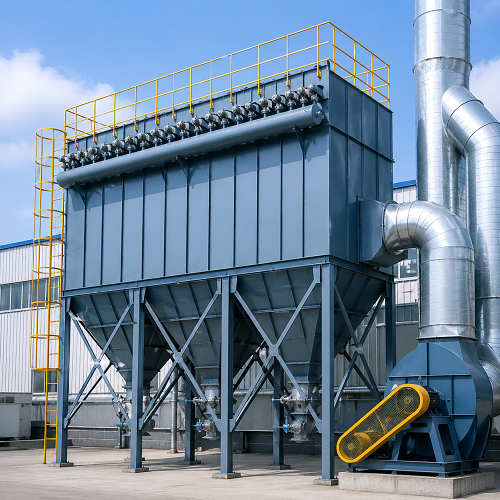
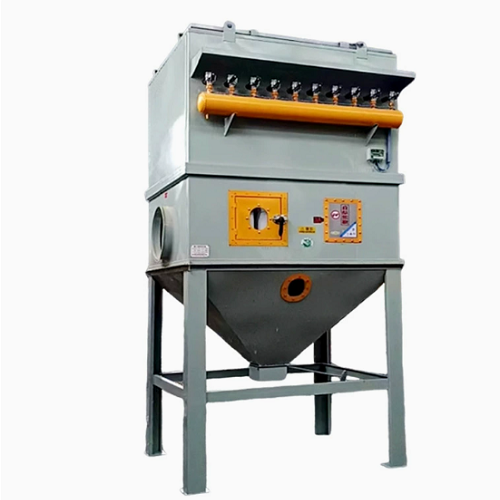
A dust collection system creates negative pressure at the dust source. Hoods, machine ports or extraction arms capture contaminated air. Ductwork transports the air at sufficient velocity. The collector separates dust using filter bags, cartridges, cyclones or hybrid pre-separation. The fan provides airflow and static pressure, while the discharge system stores dust for removal.
Each part affects the others. If the hood is open and far from the source, the required airflow increases. If ductwork is too restrictive, fan pressure increases. If filter area is too small, pressure drop rises and filter life falls. If the hopper is hard to empty, maintenance becomes unreliable.
PureAirTek reviews these relationships before recommending equipment. A design that looks slightly more detailed during quotation usually saves time after installation because the buyer understands why each component is included.
Technical Specifications
The table below gives reference ranges for engineering discussion. Final values depend on dust type, layout, process schedule and local requirements.
| Parameter | Typical Range | Buyer Notes |
| Air volume | 2,000 to 120,000 m3/h | Depends on source count and simultaneity |
| Duct velocity | 16 to 28 m/s | Selected by dust weight and settling risk |
| Static pressure | 1,500 to 5,500 Pa | Includes hood, duct, collector and discharge losses |
| Collector type | Baghouse, cartridge, cyclone or hybrid | Match dust load, particle size and maintenance plan |
| Fan control | Direct start, VFD, PLC or zone control | Variable operation can reduce energy use |
| Monitoring | Differential pressure, fan current, airflow checks | Supports acceptance and troubleshooting |
| Safety options | Spark arrestor, grounding, isolation, explosion venting | Review for sparks or combustible dust |
Selection Guide
Start by mapping all dust sources. List machines, ports, hoods, cutting tables, sanding areas, welding stations and powder handling points. Record whether sources run continuously or intermittently. This creates the basis for airflow and system type selection.
Then review dust properties. Heavy chips, fine fumes, abrasive particles, hot sparks, sticky dust and combustible dust require different engineering decisions. Dust behavior affects duct velocity, pre-separation, filter media, fan location, safety devices and discharge method.
Finally compare lifecycle cost. A lower equipment price may become expensive if the fan consumes too much power, filters load too quickly or maintenance access is poor. PureAirTek recommends reviewing total static pressure, filter area, compressed air use, spare part cost and future expansion before purchase.
| Decision Point | Why It Matters | Recommended Review |
| Source count and schedule | Defines airflow demand | Use realistic simultaneity assumptions |
| Duct layout | Controls pressure loss and balance | Minimize unnecessary elbows and long flexible hose |
| Collector type | Affects filter life and maintenance | Choose by dust profile and process load |
| Fan selection | Controls airflow at real pressure | Use fan curve, not only motor power |
| Maintenance access | Determines long-term reliability | Plan doors, platforms, hoppers and gauges |
Application Industries
These engineering principles apply to furniture plants, woodworking shops, metal fabrication, welding, laser cutting, plasma cutting, grinding, chemicals, food processing, plastics, ceramics, packaging and general manufacturing. Each industry needs different capture details but the design logic remains consistent.
PureAirTek supports both equipment buyers and distributors. For end users, the goal is a working system. For distributors, the goal is a clear technical explanation that helps customers compare options and approve the quotation.
Furniture and woodworking factories
Welding, cutting and grinding workshops
Powder handling and packaging lines
General manufacturing plants
Engineering contractors building turnkey systems
Distributors preparing technical proposals
Advantages and Benefits
A properly engineered system improves capture efficiency, reduces visible dust, lowers maintenance risk and gives the buyer a clearer operating baseline. Operators can work in cleaner conditions, maintenance teams can diagnose pressure changes and managers can explain the system during customer visits.
The financial advantage comes from correct sizing. Correct duct design reduces fan power. Correct filter area extends filter life. Correct access reduces service time. Correct monitoring prevents hidden failures. These benefits are why PureAirTek treats engineering review as part of equipment selection.
| Benefit | Impact |
| Cleaner capture at source | Less dust escape and better workshop conditions |
| Stable pressure drop | Predictable filter cleaning and maintenance |
| Lower energy cost | Reduced unnecessary fan pressure and airflow waste |
| Better audit readiness | Clear records and cleaner production areas |
| Future expansion support | Easier planning when new machines are added |
Installation Considerations
Installation should follow the approved layout. Changing duct routes, branch angles or collector position on site can alter pressure loss and system balance. If changes are necessary, the engineering team should review the effect before final commissioning.
Collectors should be installed where filters, pulse valves, hoppers, discharge valves, gauges and control panels can be reached safely. Outdoor systems may need weather protection. Indoor systems may need noise, space and material handling review.
Commissioning should include airflow readings, fan current, differential pressure, damper positions, pulse cleaning test and operator training. These records become the reference for future troubleshooting.
Maintenance Guide
Maintenance planning should begin before equipment is purchased. A system that is hard to service will eventually be ignored. Pressure gauges should be visible, filters should be removable, hoppers should be easy to empty and access doors should be placed at important duct locations.
Daily checks should include differential pressure and visible dust escape. Weekly checks should include dust discharge, compressed air pressure, pulse valve sound and fan vibration. Monthly checks should include filter seals, duct accumulation, damper position and sensor condition.
PureAirTek recommends keeping a maintenance log with pressure readings, filter replacement dates, process changes and abnormal observations. This helps Dongguan Kelong Environmental Technology Co., Ltd. review performance if the plant expands or changes material.
| Maintenance Item | Frequency | Purpose |
| Differential pressure | Daily | Track filter loading and leaks |
| Dust discharge | Weekly | Avoid hopper blockage |
| Pulse system | Weekly | Confirm compressed air and valve response |
| Ductwork | Monthly | Find settled dust or damaged joints |
| Fan and motor | Monthly | Check current, vibration and belts |
Common Problems and Solutions
| Problem | Likely Cause | Solution |
| Weak suction at far branches | Pressure loss or imbalance | Rebalance dampers and review duct sizing |
| Dust settles in ducts | Velocity too low | Adjust airflow or duct diameter |
| High energy cost | Fan oversized or layout restrictive | Review fan curve and reduce pressure loss |
| Filters clog quickly | Filter area too small or dust load high | Increase filter area or add pre-separation |
| System hard to maintain | Poor access design | Add platforms, doors and clearer service space |
| Expansion is difficult | No reserved capacity | Plan future connection points early |
Troubleshooting should follow the airflow path: source, hood, branch duct, main duct, collector, fan and discharge. Replacing filters is not enough if the real problem is capture or duct design.
PureAirTek can review photos, layout sketches, machine lists and pressure readings to help identify whether the project needs adjustment, redesign or additional equipment.
Practical Industrial Example
A manufacturing plant may add machines over several years until the original dust collector no longer performs well. Far branches become weak, filters load quickly and operators complain that dust remains near the machines. The purchasing team may request a larger fan, but that may only increase energy use.
A PureAirTek review would check source airflow, duct velocity, total static pressure, filter area and maintenance access. The recommendation may include duct resizing, balancing dampers, a different fan, additional filter area or a second collector for high-load sources. The value comes from solving the actual engineering problem.
Related PureAirTek resources include Baghouse Dust Collectors, Cartridge Dust Collectors, Industrial Exhaust Fans, How to Design an Industrial Dust Collection System, How to Calculate Airflow for Dust Collection and Dust Collection Ductwork Design Guide.
Engineering Cost and Acceptance Checklist
Before purchase, buyers should confirm whether the quotation includes source review, airflow basis, duct pressure estimate, fan curve, collector pressure drop, maintenance access and safety options. These details separate an engineering quotation from a simple equipment price.
During acceptance, record airflow at key points, fan current, differential pressure, compressed air pressure, damper settings and visible capture performance. These values help the factory compare future performance with the original baseline.
The final handover should confirm spare parts, filter replacement method, access requirements, operator training and emergency stop procedures. For export-oriented factories, this documentation supports customer audits and shows that the dust collection system is managed as long-term industrial environmental equipment.
Detailed Buyer Review and Engineering Notes
A buyer should never approve a dust collection project only by comparing collector model, motor power and price. The quotation should explain how airflow was estimated, how duct pressure loss was calculated, how the fan was selected and how the filter area matches the dust loading. If these assumptions are missing, the factory may buy equipment that looks correct but cannot maintain stable capture in daily operation.
For multi-source workshops, the engineering team should also review simultaneity. Some machines operate continuously, while others operate only during peak production. A system designed for every source at full airflow may be unnecessarily expensive, but a system designed too aggressively around diversity may fail during real peak demand. PureAirTek recommends documenting the assumed operating schedule so the buyer and contractor understand the design basis.
Safety review is another important part of the purchasing process. Sparks, abrasive dust, fine combustible powders, hot particles, static electricity and outdoor discharge conditions can change the equipment package. Depending on the application, a project may require spark arrestors, grounding, explosion venting, isolation valves, flame-retardant filter media or a separate collector for high-risk sources.
After installation, acceptance should be based on measured results. The team should record airflow at key hoods, fan current, differential pressure, compressed air pressure, damper positions, visible capture performance and dust discharge behavior. These baseline records make future troubleshooting much easier because maintenance teams can compare new readings against the original accepted condition.
For distributors and engineering contractors, these records also support long-term customer relationships. When a factory adds machines, changes material or increases working hours, PureAirTek can review the original baseline and recommend whether the plant needs damper adjustment, extra duct branches, more filter area, a larger fan, pre-separation or a second collector. This helps buyers avoid unnecessary replacement and helps distributors sell technical value instead of only equipment price.
Additional Practical Scenario
Consider a factory that operates several production areas in one building. One zone creates heavy chips, another creates fine sanding dust, and another creates occasional welding fumes. A single collector may be possible, but only if the dust streams are compatible and the duct network can be balanced. In some cases, separating high-load or high-risk sources reduces filter problems and simplifies maintenance.
PureAirTek would review machine location, dust characteristics, production schedule, available space, roof or wall exhaust conditions, compressed air capacity and maintenance access. The final recommendation may include a centralized system, several local collectors, a hybrid layout or staged installation. The best choice is the one that gives stable capture, reasonable energy cost and clear maintenance responsibility.
Operating Cost Control for Long-Term Projects
Operating cost should be reviewed before the equipment is ordered. Fan power is influenced by duct pressure loss, collector pressure drop and unnecessary airflow. Compressed air cost is influenced by pulse cleaning settings, air leakage and filter loading. Filter replacement cost is influenced by media choice, air-to-filter ratio and dust loading. Cleaning labor is influenced by hopper design, bin size and access.
PureAirTek encourages buyers to evaluate these costs as part of the purchase decision. A system with a slightly higher equipment price may be less expensive over several years if it uses less fan power, extends filter life and reduces unplanned shutdowns. Dongguan Kelong Environmental Technology Co., Ltd. can support project review through PureAirTek when buyers need a clearer comparison between options.
The maintenance team should be involved before final approval. They should confirm whether filters can be removed safely, whether the hopper can be emptied without dust escape, whether pressure gauges are visible and whether spare parts are available. A design that maintenance staff can actually service will perform better than a design that only looks good in a quotation.
For international buyers, documentation matters. A complete project file with layout, airflow assumptions, equipment specifications, spare parts and commissioning records helps the factory demonstrate professional environmental management during customer visits and audits.
FAQ Section
1. What is the most important part of dust collection design?
Source capture is usually the most important part. If dust does not enter the hood, the collector cannot remove it.
2. How do I choose between different collector types?
Choose by dust type, air volume, particle size, temperature, moisture, safety risk and maintenance expectation.
3. Why is static pressure important?
The fan must deliver required airflow at total static pressure. Ignoring pressure loss leads to weak suction or wasted energy.
4. How can operating cost be reduced?
Reduce duct resistance, select proper filter area, maintain pulse cleaning and use VFD control where production varies.
5. Should future expansion be included?
Yes. Reserving space, duct routes and fan margin can save major redesign cost later.
6. What information should I send for a quote?
Send layout, machine list, dust type, photos, duct distance, working schedule and target installation date.
7. Can PureAirTek help contractors?
Yes. PureAirTek supports contractors and distributors with equipment selection, design review and technical proposal logic.
Conclusion
Dust Collection System Maintenance Planning should be evaluated as a complete engineering and operating cost decision. The best system balances capture, airflow, ductwork, filtration, fan pressure, safety and maintenance.
PureAirTek provides industrial dust collection equipment and project support for factories, contractors and distributors. With Dongguan Kelong Environmental Technology Co., Ltd., PureAirTek helps international buyers prepare systems that work in real workshops.
Request a Quote CTA
Contact PureAirTek for a dust collection engineering quotation. Send your layout, machine list, dust source photos, material type, operating schedule and installation target. PureAirTek will review the project and recommend a practical industrial dust collection solution.