Best Dust Collector for CNC Woodworking Machines
Introduction
Wood dust collection is one of the most important infrastructure decisions in a professional woodworking shop or furniture factory. It affects worker comfort, machine uptime, finishing quality, housekeeping cost, fire risk, filter replacement budget and customer perception during factory audits. Best Dust Collector for CNC Woodworking Machines is not a small ma intenance topic; it is a production engineering question for B2B buyers.
PureAirTek supports distributors, woodworking machinery integrators, factory owners, procurement managers and engineering contractors who need a dust collection system that works in real production. The best solution is not selected by catalog size alone. It must match machine ports, material type, dust volume, duct distance, simultaneous operation, filter media, fan pressure and maintenance habits.
This guide provides professional industrial English content suitable for international buyers. It combines educational blog content, technical guide depth, product marketing information and practical applicatio n examples so buyers can compare woodworking dust collection solutions with confidence.
Industry Background
Woodworking production has changed quickly. CNC routers, panel saws, edge banders, wide belt sanders and automated drilling lines produce more output per hour than traditional manual equipment. Higher productivity also means more dust, faster chip generation and stronger requirements for clean p roduction. In export furniture factories, dust control can affect coating quality, packaging cleanliness and audit results.
Fine wood dust is also a safety and health concern. MDF dust, sanding dust and hardwood dust can remain airborne long after the machine stops. Large chips may be easy to see, but fine particulate travels through the workshop, settles on surfaces and loads filters. A professional collectio n system captures dust at the source and transports it safely to a collector and discharge point.
PureAirTek designs industrial dust collection and air pollution control equipment for applications such as woodworking, furniture manufacturing, metal fabrication and VOC treatment. For wood dust, the engineering focus is airflow stability, duct transport velocity, pre-separation, filter life and safe dust dischar ge.
Equipment Working Principle
CNC woodworking machines require high airflow at the moving hood because the cutter changes direction, cutting depth and feed speed throughout the program. MDF dust is especially fine and can escape if the hood skirt, duct diameter or collector airflow is undersized.
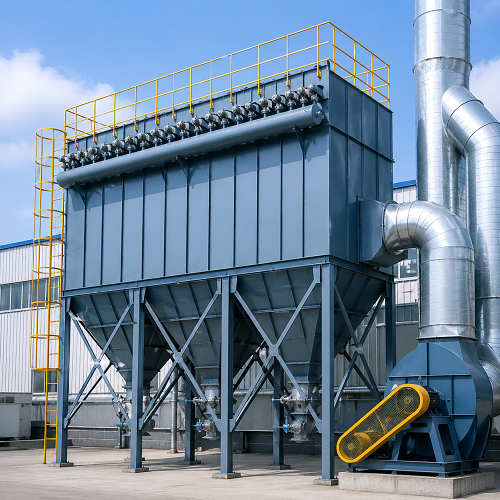
A typical woodworking dust collection system starts at the machine hood or port. Air must enter the hood fast enough to capture chips and fine dust before they escape. The contaminated air then moves through ductwork at a velocity high enough to prevent dust settling. Depending on dust loading, a cyclone or drop-out box may remove heavy chips before the air reaches the main filter collector.
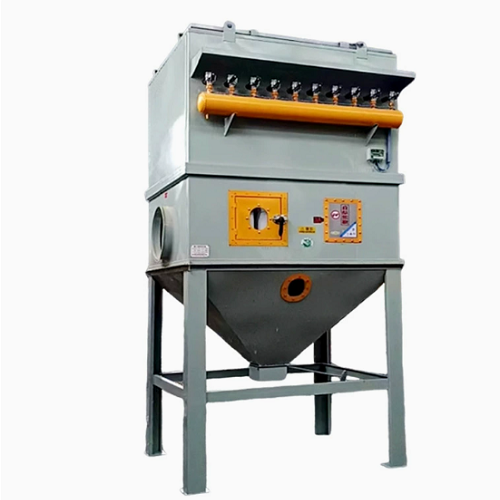
The collector then separates dust from air using filter bags, pleated cartridges or a combination of pre-separation and final filtration. Pulse-jet cleaning or mechanical cleaning removes accumulated dust from the filter surface. Clean air is discharged outdoors or returned to the workshop only when allowed by local rules and filtration design. Dust falls into a hopper, bin, rotary valve or s ealed collection container.
Technical Specifications
| Specification Item | Professional Design Recommendation |
|---|---|
| Recommended system types | Cyclone pre-separator with baghouse or cartridge collector; compact collectors for small cells; centralized systems for multi-machine factories |
| Typical airflow range | 2,000-120,000 m3/h depending on number of machines, simultaneous operation and duct layout |
| Duct transport velocity | Usually 18-25 m/s for wood chips and sawdust; confirm by material and duct diameter |
| Filter media | Polyester needle felt bags, anti-static bags, pleated cartridges, PTFE membrane media for fine dust applications |
| Pre-separation | Cyclone, drop-out box or spark separator recommended for high chip loading and abrasive dust |
| Dust discharge | Rotary valve, screw conveyor, sealed bagging unit, dust bin or briquetting interface |
| Controls | Differential pressure monitoring, pulse-jet controller, fan starter/VFD, machine interlocks, emergency stop and optional spark detection |
| Construction | Carbon steel painted housing, reinforced hopper, inspection doors, service platforms and customized inlet arrangements |
| Safety options | Explosion venting, isolation valve, anti-static filter media, grounding, spark detection and fire suppression where required |
| CNC interface | Flexible hose to moving hood, automatic blast gate, high branch velocity and chip pre-separation |
Technical specifications must be tied to a real process. A collector rated for a certain airflow can perform poorly if duct velocity is too low, if too many blast gates are open, or if the fan cannot overcome external static pressure. PureAirTek reviews machine l ist, duct route, dust type, operating schedule and expansion plans before finalizing the proposal.
Selection Guide
Selection begins with the machines. List every dust source, port diameter, required airflow, operating hours and whether the machine runs at the same time as other machines. Then classify the dust as chips, shavings, fine sanding dust, MDF powder or mixed dust. This determines whether the project should use a cyclone pre-separator, baghouse dust collector, cartridge dust collector or a custom combination.
For woodworking, duct design is as important as the collector body. Long horizontal duct runs, sharp elbows, undersized main ducts and uncontrolled blast gates cause weak suction. A good system design balances branches, maintains transport velocity and reduces unnecessary pressure loss. This is where professional engineering saves both energy and maintenance cost.
| Buyer Question | Recommended Approach | Why It Matters |
|---|---|---|
| Which machines run together? | Calculate simultaneous airflow instead of adding every machine at full operation. | This prevents both undersized systems and oversized fan energy cost. |
| Is the dust chips or fine powder? | Use cyclone pre-separation for chips and finer media for sanding or MDF dust. | Different dust sizes require different filtration and transport design. |
| Will the system expand? | Reserve duct branches, fan margin and control capacity. | Furniture factories often add CNC, edge banding or sanding capacity later. |
| Are sparks possible? | Add spark traps, detection or isolation where cutting, sanding or metal contamination can create ignition. | Wood dust can be combustible and should be treated seriously. |
| Who will maintain it? | Design for easy bin emptying, filter access and cl ear pressure monitoring. | A system that is hard to maintain will slowly lose performance. |
Application I ndustries
Wood dust collection systems are used in cabinet manufacturing, panel furniture production, solid wood furniture factories, door and window plants, flooring production, plywood processing, millwork shops, sawmills, MDF cutting, CNC routing, sanding rooms, edge b anding lines and finishing preparation areas. Each application has different dust characteristics and capture requirements.
In a CNC workshop, high chip volume and moving hoods dominate the design. In sanding operations, fine dust and filter loading are more important. In edge banding, multiple small ports require careful balancing. In a complete furniture factory, centralized ducting, pre-separation and disch arge planning become essential.
Advantages and Benefits
- Cleaner workshop air and reduced visible dust on machines, floors and finished products.
- Improved operator comfort and reduced housekeeping workload.
- Better finishing quality by reducing airborne dust before coating and packaging.
- More stable machine suction when ducts and blast gates are correctly designed.
- Lower filter replacement cost through correct media, pre-separation and pulse cleaning.
- Lower energy cost when VFD fan control and ma chine interlocks are used.
- Improved safety planning for combustible wood dust and dust accumulation.
Installation Cons iderations
Installation should consider collector location, duct support, maintenance access, dust discharge, electrical controls and fire safety. The collector should be positioned where operators can empty bins, inspect filters and service valves without stopping surrou nding production. Ducts should be sealed, grounded where required and routed to avoid unnecessary elbows.
For a cabinet factory operating two 1325 CNC routers with automatic tool changes and vacuum tables, PureAirTek would review the production layout, machine operation sequence, duct route and available installation space before recommending the final equipment. If the system is outdoors, weather protection and corrosion-resistant details may be needed. If dust is combustible, explosion vent direction, isolation and local safety requirements must be reviewed early.
Maintenance Guide
Maintenance teams should monitor differential pressure, suction at critical machines, dust bin level, pulse cleaning operation, duct blockage, fan vibration and visible dust at discharge points. A good maintenance routine prevents performance loss before operators complain. Emptying bins on time is especially important because overfilled hoppers can re-entrain dus t and increase filter pressure.
Filter replacement should be based on pressure trends and visible condition, not only calendar time. Compressed air for pulse cleaning must be clean and dry. Blast gates should be labeled and operators trained to close unused branches. If ne w woodworking machines are added, the system should be recalculated rather than simply connecting another duct.
Common Problems and Solutions
| Problem | Likely Cause | Practical Solution |
|---|---|---|
| Weak suction at far machines | Duct imbalance, too many open gates, fan static pressure too low | Balance blast gates, close unused branches and review fan curve |
| Dust settling inside ducts | Transport velocity too low or duct diameter too large | Resize ducts, increase velocity or separate branches by production zone |
| Filters plug quickly | Fine sanding dust, humid dust, no pre-separation or high air-to-cloth ratio | Use suitable media, cyclone pre-separation and conservative filtration velocity |
| Dust leaks from collector | Poor gasket seals, full hopper, damaged filter or loose access door | Inspect seals, replace damaged filters and empty dust bins regularly |
| High electricity cost | Fan runs at full speed when only few machines operate | Use VFD control, pressure control and machine interlock logic |
| Dust explosion concern | Fine dust accumulation, ignition source or unprotected collector | Conduct risk review, improve housekeeping and consider explosion protection o ptions |
Real Industrial Scenario
In a cabinet factory operating two 1325 CNC routers with automatic tool changes and vacuum tables, the buyer may first request a dust collector price based only on motor power. A professional proposal should go further: calculate airflow by machine, confirm simultaneous operation, size ducts, choose pre-separation, select filter media, confirm fan pressure and plan dust discharge. This prevents a common problem where the collector is large enough on paper but suction is weak at the act ual machine.
PureAirTek can integrate related equipment such as Baghouse Dust Collectors, Cartridge Dust Collectors, Cyclone Dust Collectors and Industrial Exhaust Fans. When a woodworking factory also has coating, gluing or solvent exhaust, related VOC products such as Activated Carbon Adsorbers or Spray Tower Scrub bers may be considered as part of a broader air pollution control plan.
How to Reduce Operating Costs
Operating cost in woodworking dust collection comes from fan electricity, compressed air, filter replacement, downtime and labor. The largest saving usually comes from controlling airflow. A fan running at full speed for all shifts wastes energy when only part of the factory is operating. VFD cont rol and machine interlocks can reduce fan speed while maintaining required suction.
Filter cost is reduced by pre-separating heavy chips, avoiding moisture, maintaining pulse cleaning and preventing duct overload. A cyclone ahead of the final collector can reduce filter loading in high-chip applications. For fine sanding dust, conservative filter velocity and good media selection are more important than simply increasing motor power.
Maintenance labor can be reduced by designing easy access doors, sealed discharge containers and clear pressure monitoring. A system that is easy to inspect will be maintained more consistently, which keeps airflow stable and avoids surprise downti me.
Internal Links for Topic Cluster
- Related product: Baghouse Dust Collector for wood dust applications
- Related product: Cartridge Dust Collector for fine sanding and CNC dust
- Related knowledge: How to Size a Cartridge Dust Collector
- Related knowledge: Common Cartridge Dust Collector Problems
- Related application: Dust Collection Solutions for Woodworking and Furniture Manufacturing
FAQ
1. What type of dust collector is best for woodworking?
The best choice depends on dust volume, particle size and factory layout. High chip loading often benefits from cyclone pre-separation plus a baghouse. Fine sanding dust may require high-efficiency media and conservative filtr ation velocity.
2. How do I know the required airflow?
Calculate airflow by machine port and simultaneous operation, then con firm duct transport velocity and fan static pressure. PureAirTek can help review layouts and machine lists for quotation.
3. Can one system serve CNC, saws and sanders together?
Yes, but branches must be balanced and dust characteristics considered. Sanding dust ma y need different filtration attention than chips from cutting machines.
4. Should clean air return to the workshop?
This depends on local regulations, dust type and filtration design. Many factories discharge outdoors; air return requires careful filtration and saf ety review.
5. How often should filters be replaced?
Replacement depends on dust load, media, pulse cleaning, humidity and op erating hours. Differential pressure trends are more reliable than a fixed calendar rule.
6. Is wood dust explosive?
Fine airborne wood dust can be combustible. Factories should review ignition sources, dust accumulation, explosion protection and housekeeping proce dures.
7. What information is needed for a quote?
Send machine list, port sizes, workshop layout, operating schedule, dust ty pe, duct distance, power supply and any safety or environmental requirements.
Conclusion
Best Dust Collector for CNC Woodworking Machines should be approached as a complete industrial engineering topic. The right solution improves workshop cleanliness, protects production quality, reduces energy cost and supports safer operation. PureAirTek helps buyers move from a simple dust collector purchase to a complete wood dust control system based on real machine data and practical factory conditions.
Request a Quote CTA
PureAirTek, supported by Dongguan Kelong Environmental Technology Co., Ltd., supplies industrial dust collection and air pollution control equipment for international markets. To request a woodworking dust collection quotation, send your machine list, port sizes, layout drawing, dust type and production schedule. Our team will recommend suitable equipment, airflow, filtration media, fan configuration and installation consider ations.
Additional buyer note: when comparing quotations, ask every supplier to state airflow basis, filter area, fan static pressure, dust discharge method, media type and maintenance access. These details make quotations comparable and protect the buyer from low-cost systems that cannot maintain suction after installation.