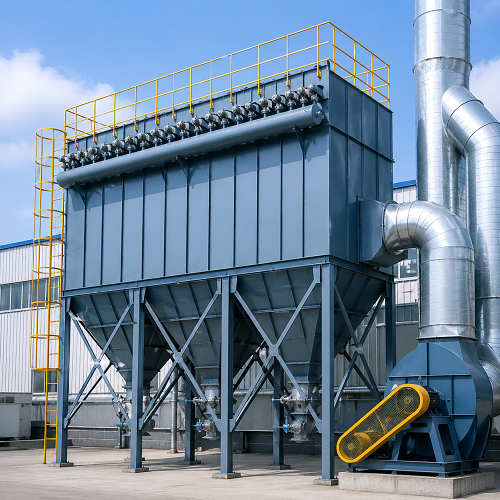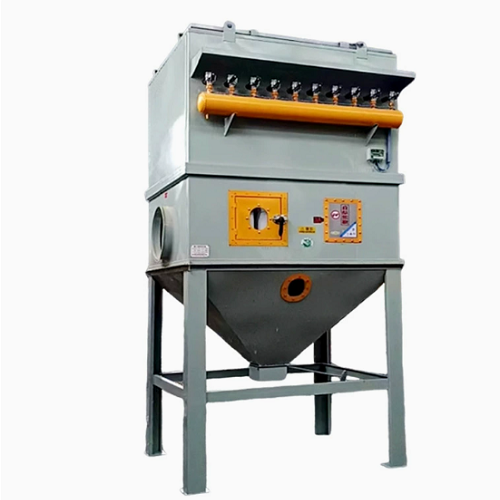
Centralized Dust Collection vs Portable Dust Collectors
Introduction
For industrial buyers, Centralized Dust Collection vs Portable Dust Collectors is not only a workshop cleaning topic. It affects production uptime, furniture surface quality, worker comfort, fire prevention, filter cost, fan energy and the professional image of the factory. A weak dust extraction system may still look acceptable during a short demonstration, but after weeks of real cutting, sanding or edge processing it can create dust deposits, blocked ducts, high pressure drop and operator complaints.
PureAirTek writes this guide for B2B woodworking buyers, distributors, factory owners, engineering contractors and procurement managers who need manufacturer-level guidance before purchasing equipment. The best solution must match machine ports, dust type, airflow, duct velocity, filter media, fan pressure, discharge method and maintenance access.
Industry Background
Furniture manufacturing and woodworking shops now use faster CNC routers, panel saws, edge banders, drilling machines and sanding lines. Higher productivity creates more dust per hour and makes old portable collectors less effective. Fine MDF dust, sanding powder and mixed wood chips can travel across production zones, settle on finished panels and increase housekeeping cost.
International buyers increasingly ask for complete dust control systems rather than stand-alone collectors. A professional project includes hoods, ducts, blast gates, spark control, pre-separation, filters, fans, controls and safe dust discharge. PureAirTek supports this type of complete industrial air pollution control approach.
Equipment Working Principle
A woodworking dust collection system captures dust at the machine hood, transports it through ductwork, separates heavy chips when needed, filters fine particles and discharges dust into a sealed bin, bagging unit, rotary valve or conveyor. Airflow must be high enough to capture dust at the source and maintain duct transport velocity so chips do not settle inside horizontal runs.
In a growing cabinet shop replacing several mobile collectors while adding a second CNC router and edge banding line, the system should be designed from machine data rather than guessed from motor power. The collector, fan and duct network must work together. A good filter cannot solve a poorly designed hood, and a powerful fan can waste energy if branches are unbalanced.
Technical Specifications
| Specification Item | Professional Design Recommendation |
|---|---|
| System airflow | 2,000-120,000 m3/h depending on machine quantity, port size and simultaneous operation |
| Duct velocity | Usually 18-25 m/s for wood chips and mixed sawdust; confirm by material and branch layout |
| Collector type | Cyclone plus baghouse, cartridge collector, compact unit or centralized system depending on dust loading |
| Filter media | Polyester needle felt, anti-static bags, pleated cartridges or PTFE membrane for fine dust |
| Cleaning method | Pulse-jet cleaning, mechanical shaking or customized cleaning according to duty cycle |
| Discharge method | Dust drawer, sealed bag, rotary valve, screw conveyor, bin or briquetting connection |
| Control options | Differential pressure gauge, VFD fan, machine interlocks, automatic blast gates and emergency stop |
| Safety options | Spark trap, grounding, anti-static media, explosion venting or isolation when required |
Selection Guide
Begin selection by listing every woodworking machine, port diameter, required airflow, operating hours and whether it runs at the same time as other machines. Classify dust as chips, shavings, MDF powder, sanding dust or mixed dust. Then calculate duct friction, filter resistance and fan static pressure.
Buyers should compare suppliers by airflow basis, filter area, fan curve, media type, discharge design and service access. A low-price collector without clear duct and fan calculations may become expensive after installation because weak suction causes production complaints.
| Buyer Question | Recommended Approach | Why It Matters |
|---|---|---|
| Which machines run together? | Calculate simultaneous airflow instead of adding every machine blindly. | This controls capital cost and fan energy. |
| Is the dust fine or coarse? | Use cyclone pre-separation for chips and fine media for sanding or MDF dust. | Different dust sizes load filters differently. |
| Is expansion planned? | Reserve duct branches, fan margin and control capacity. | Furniture factories often add CNC or sanding capacity. |
| Is dust combustible? | Review ignition sources, dust accumulation and explosion protection. | Fine wood dust can create serious safety risk. |
| Who maintains the system? | Design for easy bin emptying, filter access and pressure checks. | Good maintenance keeps suction stable. |
Application Industries
Applications include cabinet manufacturing, panel furniture, wardrobe production, door factories, flooring plants, millwork shops, CNC routing, edge banding, drilling, wide belt sanding, manual sanding booths and furniture finishing preparation. Each area needs different hood design and airflow control.
Advantages and Benefits
Cleaner workshops and less visible dust on machines and finished panels.
Improved sanding and coating quality by reducing airborne particles.
Lower housekeeping labor and better factory audit impression.
More stable machine suction when ductwork is balanced.
Reduced filter cost through correct media and pre-separation.
Lower energy cost with VFD control and machine interlocks.
Improved combustible dust management through better capture and housekeeping.
Installation Considerations
Installation should allow access to filters, hoppers, pulse valves, fan bearings and electrical controls. Duct runs should be sealed, supported and routed with as few sharp elbows as practical. Outdoor collectors need weather protection and corrosion-resistant details. If explosion venting is required, vent direction and safe distance must be planned before installation.
Maintenance Guide
Maintenance teams should record differential pressure, suction at key machines, dust bin level, pulse cleaning pressure, fan vibration and visible dust leakage. Dust bins should be emptied before overfilling. Blast gates should be labeled. If a new machine is added, the airflow calculation should be reviewed instead of simply connecting another branch.
Common Problems and Solutions
| Problem | Likely Cause | Practical Solution |
|---|---|---|
| Weak suction | Open unused gates, blocked duct, undersized fan or unbalanced branches | Balance gates, inspect ducts and review fan static pressure |
| Filter plugging | Fine sanding dust, moisture, no pre-separation or high filtration velocity | Use correct media, improve pre-separation and check pulse cleaning |
| Dust settling in ducts | Velocity too low or oversized duct | Resize duct or improve branch control |
| Dust leaks | Damaged filters, poor seals or full hopper | Replace filters, inspect gaskets and empty bins |
| High energy cost | Fan runs at full speed during partial production | Use VFD and machine interlocks |
| Safety concern | Fine dust accumulation and ignition sources | Improve housekeeping and review explosion protection |
Real Industrial Scenario
For a growing cabinet shop replacing several mobile collectors while adding a second CNC router and edge banding line, PureAirTek would request machine list, port sizes, layout, production schedule, dust type and discharge requirement before quoting. The proposal may include Baghouse Dust Collectors, Cartridge Dust Collectors, Cyclone Dust Collectors and Industrial Exhaust Fans. If coating or solvent exhaust is also present, Activated Carbon Adsorbers may be considered.
How to Reduce Operating Costs
Reduce operating cost by controlling airflow according to actual machine operation, using VFD fan control, keeping ducts sealed, selecting suitable media and preventing chips from reaching final filters. Compressed air for pulse cleaning should be dry and set at the correct pressure. A cyclone pre-separator can reduce filter load in high-chip applications.
Internal Links for Topic Cluster
FAQ
1. What information is needed for a quote?
Send machine list, port sizes, layout, dust type, operating schedule and power supply.
2. Is a baghouse or cartridge collector better for wood dust?
Baghouses are often suitable for larger wood dust loads, while cartridge collectors can work well for fine dust or compact systems. The final choice depends on dust and airflow.
3. Can one collector serve several machines?
Yes, if ducts are balanced and simultaneous airflow is calculated correctly.
4. How can filter life be improved?
Use pre-separation, correct media, dry pulse air, proper airflow and scheduled bin emptying.
5. Is wood dust combustible?
Fine wood dust can be combustible, so ignition control, housekeeping and protection options should be reviewed.
6. How do I reduce fan energy cost?
Use VFD control, close inactive branches and avoid oversizing airflow beyond process needs.
Conclusion
Centralized Dust Collection vs Portable Dust Collectors requires a complete industrial design mindset. PureAirTek helps buyers select dust collection equipment that supports clean production, stable airflow, lower operating cost and safer woodworking operations.
Request a Quote CTA
PureAirTek, supported by Dongguan Kelong Environmental Technology Co., Ltd., supplies industrial dust collection and air pollution control equipment for international markets. Send your woodworking machine list, port sizes and workshop layout to request a professional quotation.
Additional buyer note: when comparing quotations, ask each supplier to state design airflow, filter area, fan static pressure, duct assumptions, dust discharge method and maintenance access. These details make quotations comparable and help prevent low-cost systems that cannot maintain suction in daily production.
Additional buyer note: when comparing quotations, ask each supplier to state design airflow, filter area, fan static pressure, duct assumptions, dust discharge method and maintenance access. These details make quotations comparable and help prevent low-cost systems that cannot maintain suction in daily production.
Additional buyer note: when comparing quotations, ask each supplier to state design airflow, filter area, fan static pressure, duct assumptions, dust discharge method and maintenance access. These details make quotations comparable and help prevent low-cost systems that cannot maintain suction in daily production.
Additional buyer note: when comparing quotations, ask each supplier to state design airflow, filter area, fan static pressure, duct assumptions, dust discharge method and maintenance access. These details make quotations comparable and help prevent low-cost systems that cannot maintain suction in daily production.
Additional buyer note: when comparing quotations, ask each supplier to state design airflow, filter area, fan static pressure, duct assumptions, dust discharge method and maintenance access. These details make quotations comparable and help prevent low-cost systems that cannot maintain suction in daily production.
Additional buyer note: when comparing quotations, ask each supplier to state design airflow, filter area, fan static pressure, duct assumptions, dust discharge method and maintenance access. These details make quotations comparable and help prevent low-cost systems that cannot maintain suction in daily production.
Additional buyer note: when comparing quotations, ask each supplier to state design airflow, filter area, fan static pressure, duct assumptions, dust discharge method and maintenance access. These details make quotations comparable and help prevent low-cost systems that cannot maintain suction in daily production.
Additional buyer note: when comparing quotations, ask each supplier to state design airflow, filter area, fan static pressure, duct assumptions, dust discharge method and maintenance access. These details make quotations comparable and help prevent low-cost systems that cannot maintain suction in daily production.
Additional buyer note: when comparing quotations, ask each supplier to state design airflow, filter area, fan static pressure, duct assumptions, dust discharge method and maintenance access. These details make quotations comparable and help prevent low-cost systems that cannot maintain suction in daily production.
Additional buyer note: when comparing quotations, ask each supplier to state design airflow, filter area, fan static pressure, duct assumptions, dust discharge method and maintenance access. These details make quotations comparable and help prevent low-cost systems that cannot maintain suction in daily production.
Additional buyer note: when comparing quotations, ask each supplier to state design airflow, filter area, fan static pressure, duct assumptions, dust discharge method and maintenance access. These details make quotations comparable and help prevent low-cost systems that cannot maintain suction in daily production.
Additional buyer note: when comparing quotations, ask each supplier to state design airflow, filter area, fan static pressure, duct assumptions, dust discharge method and maintenance access. These details make quotations comparable and help prevent low-cost systems that cannot maintain suction in daily production.
Additional buyer note: when comparing quotations, ask each supplier to state design airflow, filter area, fan static pressure, duct assumptions, dust discharge method and maintenance access. These details make quotations comparable and help prevent low-cost systems that cannot maintain suction in daily production.
Additional buyer note: when comparing quotations, ask each supplier to state design airflow, filter area, fan static pressure, duct assumptions, dust discharge method and maintenance access. These details make quotations comparable and help prevent low-cost systems that cannot maintain suction in daily production.
Additional buyer note: when comparing quotations, ask each supplier to state design airflow, filter area, fan static pressure, duct assumptions, dust discharge method and maintenance access. These details make quotations comparable and help prevent low-cost systems that cannot maintain suction in daily production.
Additional buyer note: when comparing quotations, ask each supplier to state design airflow, filter area, fan static pressure, duct assumptions, dust discharge method and maintenance access. These details make quotations comparable and help prevent low-cost systems that cannot maintain suction in daily production.
Additional buyer note: when comparing quotations, ask each supplier to state design airflow, filter area, fan static pressure, duct assumptions, dust discharge method and maintenance access. These details make quotations comparable and help prevent low-cost systems that cannot maintain suction in daily production.
Additional buyer note: when comparing quotations, ask each supplier to state design airflow, filter area, fan static pressure, duct assumptions, dust discharge method and maintenance access. These details make quotations comparable and help prevent low-cost systems that cannot maintain suction in daily production.
Additional buyer note: when comparing quotations, ask each supplier to state design airflow, filter area, fan static pressure, duct assumptions, dust discharge method and maintenance access. These details make quotations comparable and help prevent low-cost systems that cannot maintain suction in daily production.
Additional buyer note: when comparing quotations, ask each supplier to state design airflow, filter area, fan static pressure, duct assumptions, dust discharge method and maintenance access. These details make quotations comparable and help prevent low-cost systems that cannot maintain suction in daily production.
Additional buyer note: when comparing quotations, ask each supplier to state design airflow, filter area, fan static pressure, duct assumptions, dust discharge method and maintenance access. These details make quotations comparable and help prevent low-cost systems that cannot maintain suction in daily production.
Additional buyer note: when comparing quotations, ask each supplier to state design airflow, filter area, fan static pressure, duct assumptions, dust discharge method and maintenance access. These details make quotations comparable and help prevent low-cost systems that cannot maintain suction in daily production.
Additional buyer note: when comparing quotations, ask each supplier to state design airflow, filter area, fan static pressure, duct assumptions, dust discharge method and maintenance access. These details make quotations comparable and help prevent low-cost systems that cannot maintain suction in daily production.
Additional buyer note: when comparing quotations, ask each supplier to state design airflow, filter area, fan static pressure, duct assumptions, dust discharge method and maintenance access. These details make quotations comparable and help prevent low-cost systems that cannot maintain suction in daily production.
Additional buyer note: when comparing quotations, ask each supplier to state design airflow, filter area, fan static pressure, duct assumptions, dust discharge method and maintenance access. These details make quotations comparable and help prevent low-cost systems that cannot maintain suction in daily production.
Additional buyer note: when comparing quotations, ask each supplier to state design airflow, filter area, fan static pressure, duct assumptions, dust discharge method and maintenance access. These details make quotations comparable and help prevent low-cost systems that cannot maintain suction in daily production.