How to Calculate Airflow for Woodworking Dust Collection
Woodworking airflow calculation is not simply adding a large fan to a dust collector. The required airflow starts at each machine port, then the duct system must keep wood chips and fine dust moving until they reach the collector. If airflow is too low, dust settles in ducts. If airflow is too high, energy cost and noise increase without solving poor capture.
This PureAirTek guide explains a practical airflow review method for furniture plants, CNC workshops and woodworking equipment distributors.
Woodworking Airflow Starts at the Machine Port
| Machine | Airflow Review Point | Why It Matters |
| CNC router | Port diameter, enclosure and tool path | Large chips and fine MDF dust need stable transport. |
| Panel saw | Blade guard and lower extraction port | Poor hood fit causes visible dust escape. |
| Edge banding machine | Multiple small pickup points | Branches need balancing to avoid weak points. |
| Wide belt sander | Fine dust loading and continuous operation | Filter area and airflow stability are critical. |
Calculation Sequence
- List every machine and every extraction port.
- Record port diameter, duct distance and whether the source runs continuously.
- Assign airflow by source based on port area, capture requirement and chip loading.
- Apply simultaneity only when machines do not operate at the same time.
- Choose duct diameters that maintain transport velocity for wood chips.
- Add pressure loss and select a fan that can deliver the required airflow at system resistance.
Why Simultaneity Can Be Dangerous
Some quotations reduce total airflow by assuming only part of the factory runs at once. That may be reasonable for a workshop with clear production scheduling, but it is risky when CNC, cutting and sanding frequently overlap. If operators open extra branches without enough fan capacity, the farthest machines lose suction first.
Airflow and Duct Velocity
Wood dust systems must keep enough velocity to move chips through horizontal ducts. Oversized ducts can reduce velocity and cause dust piles inside the duct. Undersized ducts raise pressure loss and energy cost. The correct duct size is the balance between transport velocity, pressure loss and future expansion.
Commissioning Checks
- Measure airflow or velocity at key branches after installation.
- Record damper positions once the system is balanced.
- Check visible dust escape at CNC doors, saw guards and sanding areas.
- Record collector differential pressure and fan current as baseline data.
Related PureAirTek Solutions
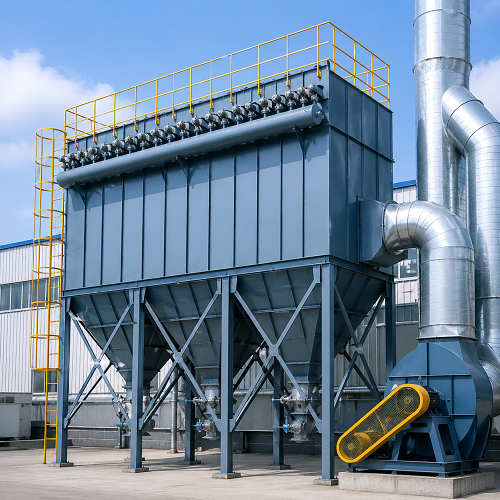
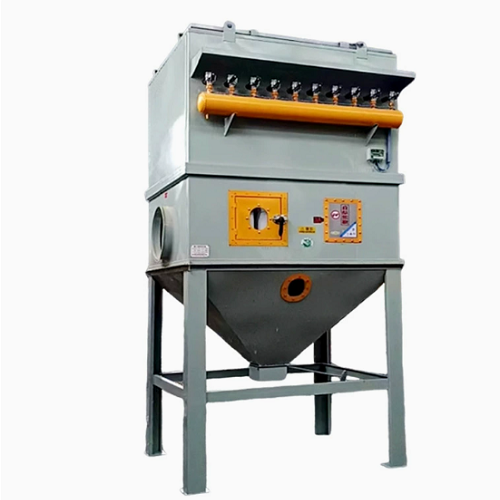
For woodworking factories, PureAirTek may recommend pulse jet baghouse dust collectors, cyclone pre-separation, centralized ductwork and industrial exhaust fans. Send the machine list, layout and material type so the airflow calculation can be reviewed as a complete system.