Hello! Welcome to visit the official website of Kelong Environmental Technology Co., Ltd.!
ABOUT US

KNOWLEDGE CENTER

Dust Collection for Metal Grinding Operations

Dust Collection for Metal Grinding Operations

Introduction

Dust Collection for Metal Grinding Operations is not only a ventilation topic. In a metal workshop, dust and fumes influence weld quality, operator exposure, machine reliability, fire risk, housekeeping cost and the ability to pass customer audits. A collector that is selected only by fan horsepower may run loudly, consume compressed air and still leave smoke above the work area. The correct approach is to match capture method, duct velocity, filter media, pulse cleaning and discharge design to the actual process.

PureAirTek writes this guide for B2B industrial buyers, distributors, factory owners, engineering contractors and procurement managers who need practical selection criteria before ordering equipment. PureAirTek and Dongguan Kelong Environmental Technology Co., Ltd. support international air pollution control projects where the final system must be easy to operate, economical to maintain and realistic for busy fabrication plants.

Industry Background

Welding and metal processing shops use MIG welding, TIG welding, spot welding, laser cutting, plasma cutting, grinding, polishing, stainless steel finishing and thermal spraying. Each process releases a different particle profile. Welding fumes are usually very fine and can remain suspended in the breathing zone. Grinding dust is heavier, abrasive and may contain sparks. Laser and plasma cutting generate fine oxide smoke that can quickly load filters if airflow is unstable.

Many plants expand production cell by cell. A small extractor is added near one welding table, then another collector is added near a cutting machine, and after several years the workshop has many unbalanced devices. This makes maintenance difficult and energy cost higher. A planned dust collection system gives management better control over air quality, filter life, compressed air use and production flexibility.

For manual grinding benches and deburring stations that create sparks and heavy abrasive particulate, the background issue is usually a combination of capture efficiency and production uptime. Buyers ask whether a cartridge collector, local arm, downdraft table or centralized ducted system is better. The answer depends on emission source position, part size, welding cycle, cutting table area, material type and whether sparks or oil mist are present.

Equipment Working Principle

A metal dust collection system captures contaminated air at or near the source, moves it through ductwork or extraction arms, removes particles through filters and returns or exhausts cleaner air according to project requirements. The fan creates negative pressure. Capture devices control the entry point. The collector provides filter area and pulse jet cleaning. The dust discharge section isolates collected particulate from the airflow.

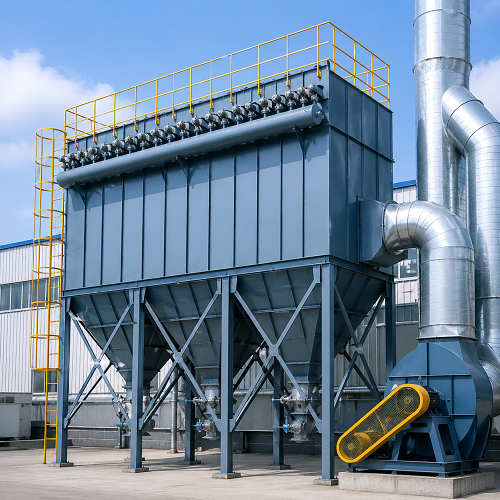
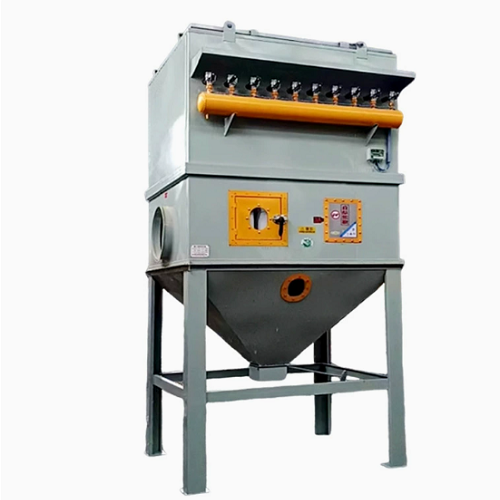
Cartridge dust collectors are often preferred for welding fumes and fine metal dust because pleated cartridges provide large filtration area in a compact body. Pulse jet cleaning sends short compressed air pulses through the filters, releasing dust cake into the hopper. For abrasive grinding dust, spark control and hopper design become important. For mixed processes, PureAirTek engineers may combine extraction arms, hoods, cutting table connections, cyclone pre-separation or spark arresting sections before the filter chamber.

The working principle must be designed around stable air volume. If duct velocity is too low, heavy particles settle in the duct. If velocity is too high, noise, energy consumption and filter loading increase. If pulse cleaning is too aggressive, filters wear faster. A good system balances capture, transport, filtration and maintenance access.

Technical Specifications

The following table gives typical specification ranges used for preliminary discussion. Final sizing should be confirmed after layout review, process load and local compliance requirements.

ParameterTypical RangeBuyer Notes
Air volume2,000 to 80,000 m3/hDepends on number of welding points, cutting tables or grinding stations
Filtration typeCartridge, baghouse or hybrid pre-separationCartridge is common for fine welding fumes; baghouse may suit heavy dry dust
Filter mediaPolyester, PTFE membrane, anti-static or flame-retardant mediaMedia choice affects efficiency, cleaning interval and safety
Filtration efficiencyUp to 99 percent plus for appropriate particle rangeMust be matched with dust type and discharge policy
Pulse cleaning pressure0.4 to 0.6 MPa typicalStable compressed air improves pressure drop control
Duct velocityOften 18 to 25 m/s for metal dustConfirm based on particle weight and spark risk
Control optionsManual, pressure based, PLC, VFD fan controlAutomation reduces energy use and improves maintenance timing
Safety optionsSpark arrestor, explosion venting, isolation, groundingRequired when combustible or spark carrying dust is possible

Selection Guide

Start selection by listing every emission source. A buyer should record the number of welding stations, cutting tables, grinding booths, robotic cells and manual finishing areas. Each source needs an airflow target and a capture method. The capture point is often more important than the collector size because even a large fan cannot solve a poorly positioned hood.

Second, identify the dust chemistry and process temperature. Mild steel welding, stainless steel grinding, aluminum finishing and galvanized material cutting create different risk profiles. Stainless steel fumes may require stronger exposure control. Aluminum dust may require stricter safety review. Oily smoke from machining should not be sent into a dry cartridge collector without evaluation.

Third, compare total cost of ownership. Procurement teams often compare only the equipment quotation, but the real cost includes fan power, compressed air, filter replacement, downtime, cleaning labor and the cost of poor air quality. PureAirTek recommends reviewing filter area, air-to-cloth ratio, access doors, hopper discharge, pressure monitoring and spare filter availability before purchase.

Selection QuestionWhy It MattersRecommended Action
Is the source fixed or moving?Moving welding work needs arms or booth captureUse flexible arms, mobile collectors or zoned extraction
Is there spark carryover?Sparks can damage filters or create fire riskAdd spark arresting, distance, baffles or pre-separation
Is dust fine or abrasive?Fine fume loads filters differently than grinding dustChoose suitable media and cleaning system
Will more stations be added later?Undersized duct mains limit expansionReserve fan and duct capacity where practical
Is return air allowed?Rules and customer audits may restrict recirculationConfirm local requirements and add monitoring if needed

Application Industries

The same engineering logic applies across many metal industries, but each industry has different production pressure. Automotive component plants need stable air quality near robotic welding cells. Steel structure factories need high air volume and rugged ducting. Machinery plants often combine welding, grinding and painting preparation in one building. Sheet metal factories need control for laser cutting, deburring and welding areas.

Other applications include ship repair, rail parts, stainless steel kitchen equipment, elevator manufacturing, hardware production, pressure vessel fabrication, agricultural machinery, metal furniture and aluminum product manufacturing. In distributor projects, PureAirTek helps convert these process descriptions into equipment models and installation packages that are easier to quote and explain to end users.

  • Welding shops and robotic welding cells

  • Laser cutting and plasma cutting workshops

  • Metal grinding, polishing and deburring lines

  • Stainless steel fabrication and hardware production

  • Steel structure, machinery and vehicle component plants

  • Contract manufacturing plants serving export buyers

Advantages and Benefits

A correctly designed system improves the workshop in ways that buyers can measure. Operators see less visible smoke. Machines stay cleaner. Electrical cabinets, sensors and rails need less cleaning. Welding supervisors can identify process defects more easily. Plant managers reduce housekeeping labor and improve the impression given to visiting customers.

For the finance team, the benefit is not limited to compliance. Stable pressure drop reduces fan overload and compressed air waste. Correct filter media extends replacement intervals. VFD fan control can reduce energy use when not all stations operate at full load. A collector that is easy to service reduces downtime because maintenance technicians can inspect filters, valves, hoppers and sensors without dismantling half of the system.

BenefitOperational Impact
Cleaner breathing zoneHelps protect operators and improve workshop comfort
More stable equipment uptimeReduces dust accumulation on machines and controls
Lower operating costOptimized fan power, compressed air and filter life
Better production imageSupports customer audits and distributor demonstrations
Scalable layoutAllows future stations to be added with less redesign

Installation Considerations

Installation success depends on layout discipline. Duct routes should be short, smooth and accessible. Long flexible hoses should be avoided where possible because they increase pressure loss and collect dust. Branches need dampers or balancing points. Access doors should be placed where technicians can inspect elbows and low points. The collector should be installed where filter changes, hopper cleaning and compressed air service are convenient.

For metal dust, spark management must be considered before finalizing the duct path. Grinding and cutting sources may need spark traps, baffle sections or adequate duct distance before filters. Electrical grounding and static control should be reviewed. If the project involves combustible dust, the engineering contractor should evaluate explosion protection, isolation and local code requirements. PureAirTek can support layout review so the delivered equipment is not forced into an unsafe or hard-to-maintain corner of the workshop.

Commissioning should include airflow measurement at representative hoods, differential pressure baseline, pulse cleaning test, fan current check, damper position record and operator training. These records become the reference for troubleshooting later.

Maintenance Guide

A dust collector should be maintained by pressure trend, not by guesswork. Operators should record differential pressure during normal production and after pulse cleaning. A slow increase may indicate filter loading. A sudden drop may indicate a broken filter, air leak or open access door. Compressed air pressure should be stable because weak pulse cleaning leaves dust cake on cartridges and high pressure can damage media.

Weekly checks should include hopper discharge, visible leaks, pulse valve sound, fan vibration and duct accumulation points. Monthly checks should include filter inspection, gasket condition, damper position, sensor calibration and grounding continuity where relevant. Spare filters, diaphragm kits and pressure gauges should be kept available for plants where downtime is expensive.

PureAirTek recommends building a maintenance log that includes operating hours, process changes, filter replacement dates, pressure readings and dust discharge observations. This simple practice helps purchasing teams plan spare parts instead of reacting to emergency shutdowns.

Maintenance ItemSuggested FrequencyWhat to Check
Differential pressureDaily or per shiftNormal range, abnormal rise or sudden drop
Hopper and dischargeWeeklyDust bridge, full bin, valve blockage
Pulse valvesWeeklyWeak pulse, leakage, failed diaphragm
Filters and sealsMonthly or by pressure trendDamage, bypass, poor gasket seating
DuctworkMonthly or after process changeSettled dust, loose joints, damaged flex hose

Common Problems and Solutions

ProblemLikely CauseSolution
Visible welding smoke remainsCapture point too far from source or airflow too lowAdjust arms or hoods, rebalance ducting and verify fan performance
Filters clog quicklyHigh dust load, wrong media or weak pulse cleaningCheck dust source, media choice, compressed air and pulse sequence
Sparks reach collectorNo spark control or duct route too shortAdd spark arrestor, baffles, pre-separation or process controls
High energy consumptionOversized fan running full speed at partial loadUse VFD control and zone dampers where appropriate
Dust leaks from doorsPoor gasket seal or high hopper pressureReplace seals and inspect discharge design
Noisy extraction armsExcessive velocity or restrictive hoseReview airflow target and reduce unnecessary pressure loss

Troubleshooting should begin with observation at the source, not at the collector only. If smoke escapes before it enters the hood, changing filters will not solve the problem. If airflow is good at one branch but weak at another, the duct network needs balancing. If pressure drop increases quickly after a new process is added, the original equipment may no longer match the production load.

For distributors and contractors, documenting these symptoms clearly helps PureAirTek recommend the correct upgrade path, whether that is a filter media change, fan adjustment, spark control section, larger collector, additional zone or a complete centralized system redesign.

Practical Industrial Example

Consider a medium size metal fabrication plant with twelve welding stations, one plasma cutting table and several grinding benches. The plant originally used ceiling fans and portable extractors. During busy shifts, smoke accumulated near the roof, grinding dust settled on machine surfaces and operators moved portable units away from the work because hoses interfered with material handling.

A practical PureAirTek proposal would separate the problem into zones. Welding stations could use extraction arms or booth hoods connected to a cartridge collector. The cutting table could receive a dedicated high load connection with spark control. Grinding benches could use stronger local capture and pre-separation if heavy abrasive dust is present. The system would include pressure monitoring, access doors and a maintenance plan. The result is not just cleaner air; it is a workshop that is easier to supervise, easier to clean and easier to show to international customers.

Related PureAirTek resources include Cartridge Dust Collectors, Baghouse Dust Collectors, Industrial Exhaust Fans, Activated Carbon Adsorbers, How Does a Cartridge Dust Collector Work?, Cartridge vs Baghouse Dust Collector and Industrial Air Pollution Control Equipment Guide.

FAQ Section

1. What is the best dust collector for welding fumes?

A cartridge dust collector is often the best choice for fine welding fumes because it provides large filter area in a compact unit. The final selection depends on welding process, station count, material and capture method.

2. Can welding fumes and grinding dust use the same collector?

They can sometimes share a system, but spark risk, particle size and abrasive loading must be reviewed. Heavy grinding dust may need spark control or pre-separation before the cartridge filters.

3. How do I reduce operating cost?

Reduce pressure loss, avoid oversized fan operation, use proper filter media, maintain pulse cleaning and consider VFD control for variable production schedules.

4. How often should filters be replaced?

Replacement depends on dust load, media type and cleaning performance. Use differential pressure trend, visual inspection and production history instead of a fixed calendar only.

5. Is general ventilation enough for welding shops?

General ventilation can dilute air but usually does not capture fumes at the source. Source capture is usually more effective for worker exposure control and cleaner production areas.

6. What information should I provide for a quotation?

Provide process type, number of stations, material, layout, duct distance, working schedule, target airflow, photos and any safety or compliance requirements.

7. Can PureAirTek support distributors?

Yes. PureAirTek can help distributors convert end user requirements into equipment recommendations, technical tables and quotation logic for industrial buyers.

Conclusion

Dust Collection for Metal Grinding Operations should be treated as an engineering and operating cost decision, not a simple equipment purchase. The right system depends on source capture, airflow calculation, filter selection, spark control, installation quality and maintenance discipline. Buyers who evaluate these factors before ordering usually receive better filtration efficiency, longer filter life and fewer production interruptions.

PureAirTek provides industrial dust collection and air pollution control equipment for welding, cutting, grinding and broader metal processing applications. With support from Dongguan Kelong Environmental Technology Co., Ltd., PureAirTek helps international buyers compare solutions and prepare practical systems for real workshops.

Request a Quote CTA

Contact PureAirTek for a project quotation, equipment recommendation or distributor support package. Send your workshop layout, process list, number of stations, photos, material type and target installation schedule. PureAirTek will review the application and recommend a practical dust collection solution for your welding or metal processing plant.


Request a Quote

Tell PureAirTek about your process, airflow requirement, dust or VOC source, workshop layout and target emission goal. Our engineering team will review the application and recommend suitable industrial air pollution control equipment.