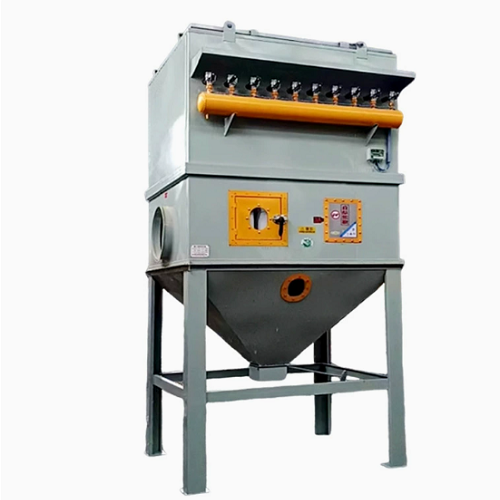
Dust Collector Fan Selection Guide
Introduction
Dust Collector Fan Selection Guide is a project engineering topic, not just an equipment question. A dust collector can be manufactured correctly and still perform poorly if airflow, hood design, duct velocity, fan pressure, filter area and maintenance access are not designed as one system. Industrial buyers often discover this after installation when one branch has strong suction, another branch has weak capture and filters load faster than expected.
PureAirTek writes this guide for B2B buyers, distributors, factory owners, engineering contractors and procurement managers who need practical design logic before ordering equipment. PureAirTek and Dongguan Kelong Environmental Technology Co., Ltd. support international dust collection and industrial air pollution control projects where the system must match real production conditions.
Industry Background
Factories now expect dust collection systems to support productivity, compliance readiness, energy control and customer audits. Woodworking plants need stable chip transport. Metal fabrication plants need source capture and spark control. Food, chemical and general manufacturing plants need attention to dust properties, access and safety. A simple fan and collector package is rarely enough for these conditions.
The background for a project where the collector is correctly sized but the fan must be selected from real pressure loss is usually a gap between process reality and equipment selection. A quotation may list air volume, motor power and filter quantity, but it may not explain hood entry loss, branch balance, duct friction, future expansion or operator behavior. These missing details become operating problems later.
A professional design approach starts by mapping sources, calculating airflow, estimating pressure loss, selecting a fan, choosing collector type and planning maintenance. This approach gives buyers a system they can operate for years instead of a collection of components that happen to be connected by ductwork.
Equipment Working Principle
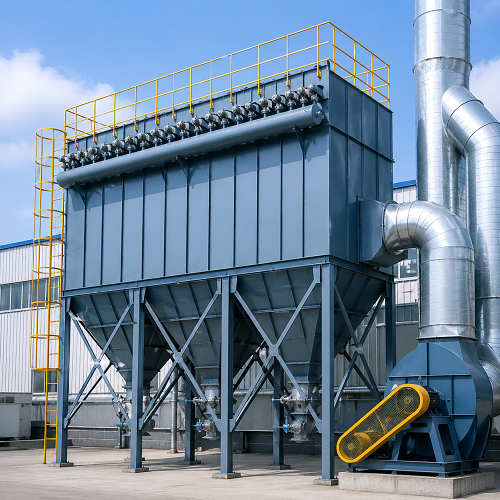
An industrial dust collection system works by creating negative pressure at the dust source. The hood or pickup point captures dust-laden air. Ductwork transports the air at enough velocity to prevent settling. The collector separates dust through filter bags, cartridges, cyclones or combined filtration. The fan provides airflow and static pressure. The discharge system stores collected material for safe removal.
For engineering design, these parts cannot be selected separately. A high-efficiency collector will not solve poor capture. A large fan can waste energy if ductwork is restrictive. A duct main that is too small can create excessive velocity and pressure loss. A duct main that is too large can allow dust to settle. PureAirTek reviews the complete path from hood to discharge before recommending equipment.
The working principle should also include control strategy. A plant with variable production may use VFD fan control or zone dampers. A plant with heavy dust may require pre-separation. A plant with sparks or combustible dust may require additional safety devices. Engineering decisions should be documented so future maintenance teams understand why the system was designed that way.
Technical Specifications
The following specification table is a preliminary reference for design discussions. Final values should be confirmed with layout, dust properties, process schedule and local requirements.
| Design Parameter | Typical Engineering Range | Buyer Notes |
| Air volume | 2,000 to 120,000 m3/h | Depends on number of sources and simultaneity |
| Duct velocity | 16 to 28 m/s typical | Select by dust weight, moisture and settling risk |
| Static pressure | 1,500 to 5,500 Pa typical | Includes hood loss, duct friction, collector drop and discharge losses |
| Filter type | Baghouse, cartridge, cyclone or hybrid | Match dust size, temperature, load and maintenance expectation |
| Air-to-cloth ratio | Project specific | Lower ratio can improve stability and filter life |
| Fan control | Direct start, damper control, VFD or PLC | VFD can reduce energy when production varies |
| Monitoring | Differential pressure, fan current, airflow checks | Needed for maintenance and acceptance |
| Safety options | Spark arrestor, grounding, explosion venting, isolation | Review dust hazards before final design |
Selection Guide
Selection begins with a process list. Record each machine, dust port, hood, booth, sanding line, cutting table or grinding station. Note operating hours and whether sources run together. This prevents the common mistake of adding all nominal port values without understanding real production, or underestimating peak demand.
Next, calculate capture airflow and duct velocity. Capture airflow depends on source geometry and enclosure quality. Duct velocity depends on dust type and transport distance. Heavy chips need enough speed to move. Fine fumes need capture near the source. Sticky or moist dust may require special review.
Finally, select collector and fan together. The fan must overcome total static pressure at the required airflow. The collector must provide enough filter area and cleaning capability. Procurement teams should compare operating cost, filter replacement, compressed air use, access doors, safety options and future expansion capacity, not only the first quotation price.
| Selection Question | Why It Matters | Recommended Action |
| How many sources operate at once? | Defines real airflow demand | Use simultaneity factor with caution |
| What dust is generated? | Affects velocity, media and safety | Review particle size, moisture, spark risk and combustibility |
| How long is the duct route? | Long routes increase pressure loss | Optimize layout before increasing fan size |
| Will production expand? | Future sources can overload the system | Reserve space and design connection points |
| Who maintains the system? | Poor access increases downtime | Choose serviceable filters, hoppers and valves |
Application Industries
Dust collection engineering applies to woodworking, furniture, metal fabrication, laser cutting, plasma cutting, welding, grinding, cement products, chemicals, food processing, packaging, plastics, battery materials, electronics, ceramics and general manufacturing. Each industry has a different dust profile and working rhythm.
PureAirTek helps convert these industries into practical design assumptions. A furniture plant may need chip transport and sanding dust control. A welding shop may need flexible source capture. A process plant may need explosion protection review. The same collector shell can have very different performance depending on the system around it.
Furniture and woodworking factories
Welding, grinding and metal fabrication plants
Laser cutting and plasma cutting workshops
Powder handling, packaging and mixing lines
General industrial manufacturing facilities
Engineering contractors and distributors building turnkey systems
Advantages and Benefits
A well-engineered system improves capture efficiency, reduces filter problems and lowers operating cost. Operators see less dust escape. Maintenance teams see more stable pressure readings. Buyers see a cleaner workshop and a clearer technical basis for future expansion.
The commercial benefit is often larger than the equipment price difference. Correct duct routing reduces fan power. Correct filter area extends filter life. Correct access reduces service time. Correct monitoring prevents hidden failures. PureAirTek designs with these operating details in mind because buyers pay for the system every day after installation.
| Benefit | Business Impact |
| Better capture efficiency | Cleaner production and improved worker comfort |
| Stable pressure drop | Predictable filter life and fan operation |
| Lower energy use | Reduced fan power through correct pressure design |
| Easier maintenance | Less downtime for filter and hopper service |
| Scalable engineering | Future machines can be added with less redesign |
Installation Considerations
Installation should follow the design drawings closely. Duct diameters, branch angles, damper positions, access doors and collector placement affect performance. Changing duct routes on site without recalculating pressure loss can create airflow imbalance.
The collector should be installed where maintenance technicians can safely reach filters, pulse valves, hoppers, bins, sensors and electrical controls. Compressed air lines should be stable and dry. Outdoor installations may need weather protection, drainage planning and safe platforms.
Commissioning should include airflow checks at representative branches, fan current, differential pressure baseline, damper position record, pulse cleaning test and operator training. These records are useful for troubleshooting and for proving that the system was accepted under real operating conditions.
Maintenance Guide
Maintenance planning starts during design. If filters are hard to remove, maintenance will be delayed. If hoppers are too small, dust may bridge or back up. If gauges are hidden, operators may ignore pressure changes. A maintainable system is usually a more reliable system.
Daily checks should include differential pressure, visible dust escape and discharge condition. Weekly checks should include hopper level, pulse valve sound, compressed air pressure and fan vibration. Monthly checks should include filter seals, duct access points, damper positions and sensor condition.
PureAirTek recommends keeping a log of pressure readings, filter changes, process changes and abnormal observations. This log helps Dongguan Kelong Environmental Technology Co., Ltd. and project partners review performance if the plant later expands or changes material.
| Maintenance Item | Frequency | Purpose |
| Differential pressure | Daily | Detect filter loading or leakage |
| Dust discharge | Weekly | Prevent hopper blockage and dust backup |
| Pulse cleaning | Weekly | Confirm valve function and air pressure |
| Duct inspection | Monthly | Find settled dust or damaged joints |
| Fan and motor | Monthly | Check vibration, current and belt condition |
Common Problems and Solutions
| Problem | Likely Cause | Solution |
| Weak suction at some machines | Unbalanced branches or high pressure loss | Rebalance dampers and inspect duct restrictions |
| Dust settles in ductwork | Velocity too low or duct oversized | Resize duct or adjust branch airflow |
| High energy cost | Fan oversized or pressure loss excessive | Review duct layout and use VFD where suitable |
| Filters clog quickly | High air-to-cloth ratio or poor pre-separation | Increase filter area or add pre-separation |
| Dust leaks from collector | Poor seals or damaged filters | Inspect gaskets, doors and filter seating |
| System cannot expand | No reserved fan or duct capacity | Plan future branches during initial design |
Troubleshooting should follow the airflow path. Start at the hood, then check branch duct, main duct, collector pressure drop, fan performance and discharge. Changing filters first may not solve a capture or duct design problem.
PureAirTek can review photos, layout sketches, equipment lists and pressure readings to help buyers identify whether the problem is capture, duct velocity, fan selection, filter loading or maintenance practice.
Practical Industrial Example
A furniture factory may add several CNC routers, sanding machines and edge banding machines over time. The original collector may still run, but dust starts accumulating in the far branches because the main duct was not designed for expansion. A larger fan alone may increase noise and energy use without solving branch balance.
A PureAirTek engineering review would map every source, calculate actual airflow demand, check duct velocity, estimate total static pressure and compare collector filter area. The recommended solution may include duct resizing, zone dampers, a larger fan, added filter area or a second collector for a high-load area. The result is a system that is easier to operate and easier to expand.
Related PureAirTek resources include Baghouse Dust Collectors, Cartridge Dust Collectors, Industrial Exhaust Fans, How Does a Baghouse Dust Collector Work?, How Does a Cartridge Dust Collector Work?, How to Calculate Airflow for Woodworking Dust Collection and Complete Guide to Metal Processing Dust Collection.
Engineering Cost and Acceptance Checklist
Before purchase, buyers should ask whether the supplier has reviewed source capture, airflow, duct pressure loss, fan curve, collector pressure drop, filter access, dust discharge and future expansion. These items decide whether a quote is engineering-based or only equipment-based.
During acceptance, the project team should record airflow at key branches, fan current, differential pressure, pulse pressure, damper positions and visible dust capture. These numbers become the baseline for later maintenance. Without baseline data, it is difficult to prove whether a future problem comes from equipment, process change or poor maintenance.
For long-term SEO and buyer confidence, PureAirTek presents dust collection system design as a technical service around the equipment. Dongguan Kelong Environmental Technology Co., Ltd. can support buyers with quotation review, project layout discussion, product comparison and after-sales maintenance planning.
Risk Control and Buyer Review Notes
Before approving a dust collection project, B2B buyers should review the risks that are often hidden behind a simple equipment quotation. These risks include underestimated airflow, excessive duct pressure loss, poor hood enclosure, difficult filter access, insufficient compressed air capacity, limited hopper volume and missing safety review for sparks or combustible dust.
A professional project file should include the source list, airflow assumptions, duct layout, fan selection basis, collector model, filter media, discharge method, control strategy and maintenance responsibilities. This file helps procurement managers compare suppliers and protects the factory when production teams request future modifications.
PureAirTek recommends using acceptance data as a management tool. Airflow readings, pressure readings, fan current and damper positions should be recorded after commissioning. If production changes later, the factory can compare new values with baseline values instead of guessing whether the collector, fan or ductwork is responsible.
For distributors and engineering contractors, this review process also improves customer trust. A buyer is more likely to approve a system when the supplier explains why the equipment is selected, how operating cost is controlled and what maintenance plan is required. Dongguan Kelong Environmental Technology Co., Ltd. can support this technical discussion through PureAirTek project review.
The final handover should also confirm spare parts, filter replacement method, access requirements, operator training and emergency stop procedures. For export-oriented factories, these documents support customer audits and show that the dust collection system is managed as long-term industrial environmental equipment.
FAQ Section
1. What is the first step in dust collection system design?
The first step is mapping all dust sources, operating schedules and process conditions. Equipment should not be selected before airflow and capture requirements are understood.
2. How do I calculate airflow?
Airflow is based on hood design, capture velocity, machine port size and simultaneity. The correct method depends on the source and dust behavior.
3. Why is duct velocity important?
If velocity is too low, dust settles in the duct. If velocity is too high, energy cost and pressure loss increase.
4. How is fan size selected?
The fan must deliver the required airflow at total static pressure, including hood loss, duct loss, collector pressure drop and discharge losses.
5. Should I choose centralized or decentralized dust collection?
Centralized systems suit multiple stable sources. Decentralized systems can be better for isolated, changing or high-risk processes.
6. How can operating cost be reduced?
Reduce unnecessary pressure loss, use efficient duct routing, select proper filter area, maintain pulse cleaning and consider VFD control.
7. Can PureAirTek help with system design?
Yes. PureAirTek can review layouts, process lists and airflow requirements to recommend practical dust collection equipment and engineering direction.
Conclusion
Dust Collector Fan Selection Guide should be handled as a complete engineering decision. The best system balances capture, airflow, duct velocity, pressure loss, filter area, fan selection, safety, maintenance and cost.
PureAirTek provides industrial dust collection equipment and project support for factories, distributors and contractors. With Dongguan Kelong Environmental Technology Co., Ltd., PureAirTek helps international buyers build systems that work in real workshops.
Request a Quote CTA
Contact PureAirTek for a dust collection system design quotation. Send your workshop layout, process list, number of machines, material type, dust source photos, duct distance and target installation schedule. PureAirTek will review your project and recommend a practical industrial dust collection solution.