Dust Collection System Pressure Loss Calculation
Pressure loss is the number that decides whether a dust collection system actually moves the air shown in the quotation. A collector can have enough filter area, but if the ductwork, elbows, hood entries and discharge losses are underestimated, the fan will operate below the required airflow and dust will escape at the machines.
This guide explains how PureAirTek reviews pressure loss for real workshop projects. It is written for factory engineers, distributors and purchasing teams who need to compare dust collector quotations with engineering logic instead of only checking fan power.
Pressure Loss Calculation Workflow
- List every capture point, machine port, hood and branch duct.
- Assign required airflow to each source based on process and capture method.
- Select duct diameters that keep transport velocity high enough for the dust type.
- Add straight duct friction, elbows, branch entries, dampers, collector pressure drop and outlet losses.
- Select a fan that can deliver the total airflow at the calculated total static pressure.
- Commission the system and record baseline airflow, pressure and fan current.
Where Pressure Loss Comes From
| System Part | What Causes Loss | What to Check Before Purchase |
| Hood or machine port | Entry turbulence and poor enclosure | Capture opening, distance from source and expected face velocity |
| Straight duct | Friction between moving air, dust and duct wall | Duct length, diameter, material and target transport velocity |
| Elbows and branches | Direction change and mixing loss | Elbow radius, number of bends and branch angle |
| Dust collector | Filter resistance and dust cake | Initial and operating pressure drop, filter area and cleaning method |
| Discharge stack | Outlet velocity and weather cap resistance | Stack diameter, outlet height and local discharge requirements |
Why Static Pressure Is Often Underestimated
Many low-price quotations only calculate the collector body and ignore the real duct route. The difference can be large when a system has long branches, sharp elbows, small machine ports, high dust loading or a tall discharge stack. In woodworking, grinding and cutting shops, a small duct diameter may look cheaper, but it raises friction loss and fan energy cost.
Another common problem is using clean-filter pressure drop only. A running dust collector has dust cake on filters, and the fan must still deliver airflow when the collector reaches normal operating differential pressure. PureAirTek normally reviews both initial and operating pressure ranges before selecting the fan.
Example Review Logic
For a furniture CNC line, the system may include machine ports, flexible hose, branch ducts, a main duct, spark or chip pre-separation, a baghouse or cartridge dust collector, fan and discharge stack. Pressure loss should be checked from the farthest machine to the fan, because that path usually limits the available airflow.
For a metal grinding line, the calculation must also consider spark control, abrasion and heavier particles. A pre-separator can add resistance, but it may protect filters and reduce fire risk. The correct decision is not the lowest pressure loss; it is the lowest practical pressure loss while keeping safety and filter life under control.
Fan Selection Notes
- Do not select fan power before total static pressure is estimated.
- Check the fan curve at the required airflow, not only the motor kW.
- Leave reasonable allowance for filter loading, but avoid oversized fans that waste energy.
- For variable production, consider VFD control and balancing dampers.
Commissioning Checklist
| Checkpoint | Why It Matters |
| Airflow at each branch | Confirms the design airflow reaches the actual source. |
| Collector differential pressure | Shows whether filters and pulse cleaning are in the normal range. |
| Fan current and rotation | Confirms the fan is operating near the intended point. |
| Visible capture test | Finds problems that calculation alone can miss. |
| Damper position record | Creates a baseline for future maintenance. |
Related PureAirTek Equipment
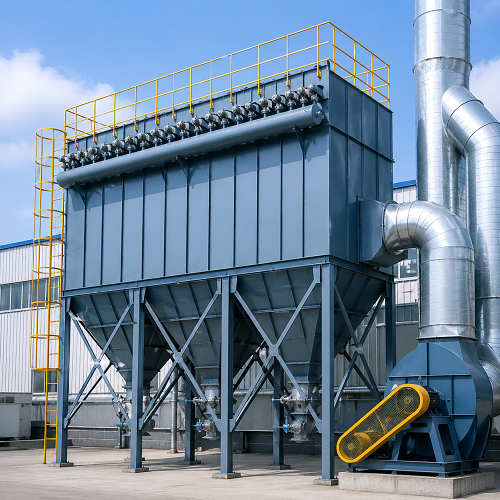
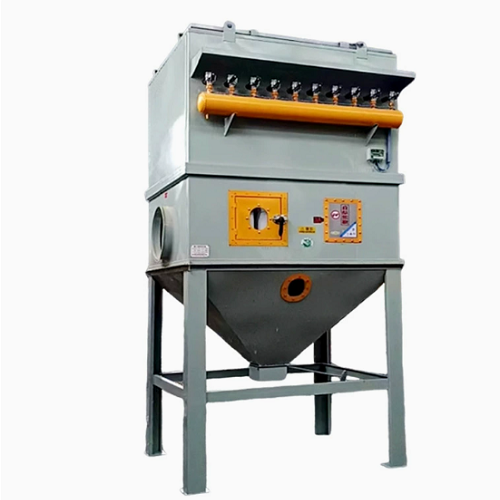
Pressure loss review is relevant for pulse jet baghouse dust collectors, cartridge dust collectors, industrial exhaust fans and centralized ducted dust collection systems. Send the workshop layout, dust source list, duct route and target airflow so PureAirTek can review the fan and collector selection together.