How to Choose Scrubber Tower Material: PP, 201, 304 or 316 Stainless Steel
Material selection for a wet scrubber must be based on actual chemical duty, not simply whether the exhaust is called “acid gas” or “odor.” The tower shell, sump, packing support, mist eliminator, pump and piping are all exposed to different combinations of liquid, gas, heat and mechanical load.
Information to collect before selecting a material
- Pollutants and concentration range, including peaks during cleaning or batch changeover.
- Gas temperature at the tower inlet and expected liquid temperature in circulation.
- Scrubbing reagent, target pH, chloride content and any oxidizing additives.
- Flow rate, static pressure, indoor or outdoor location, access requirements and local electrical supply.
This information should be reviewed together. A tower that is chemically suitable at room temperature may not be suitable at higher temperature, and a material compatible with the gas phase may not be compatible with the concentrated liquid in the pump sump.
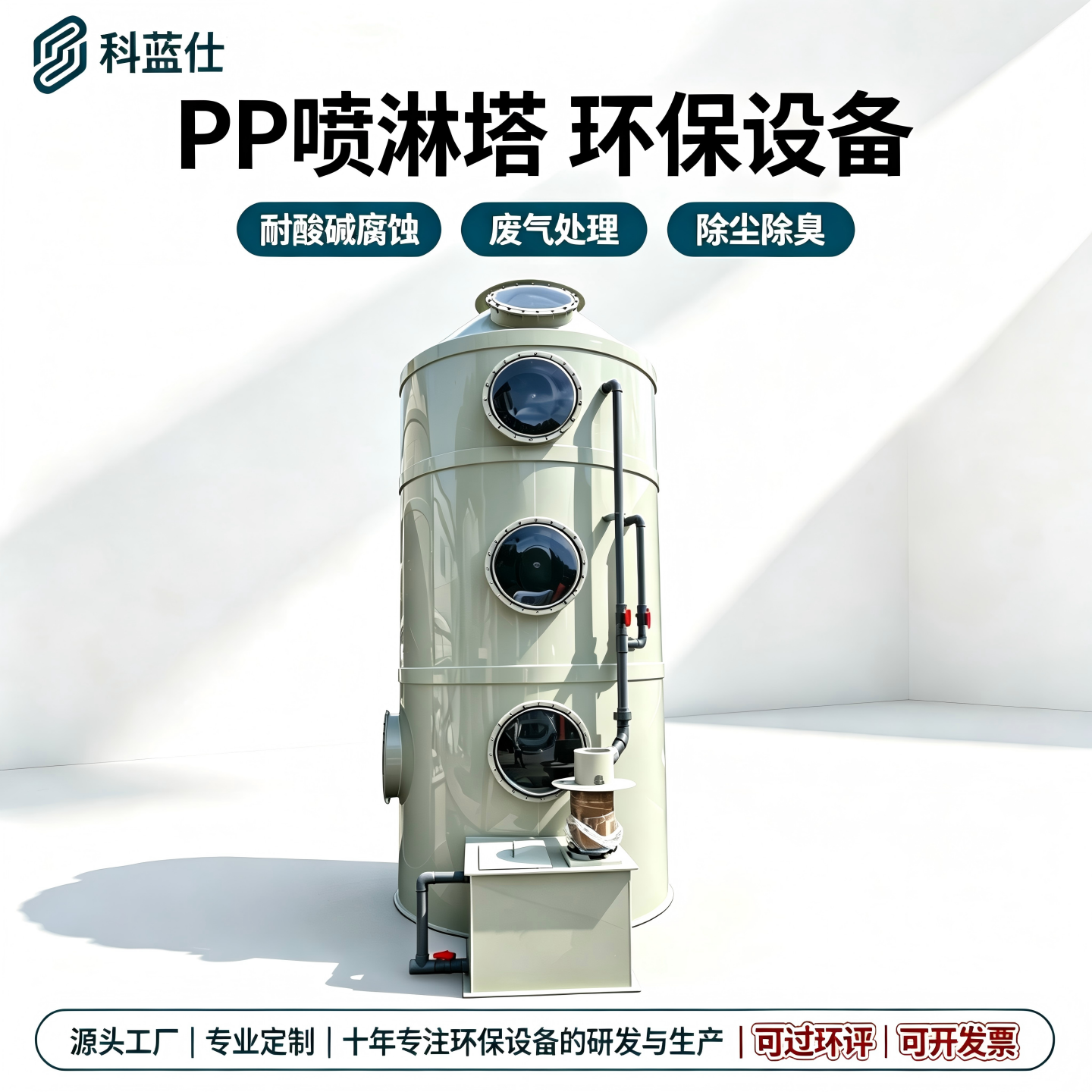
PP: corrosion resistance in suitable temperature ranges
PP is commonly selected for many acidic and alkaline wet scrubbing duties because it resists corrosion, is relatively light and can be fabricated with integrated nonmetallic components. Its limits are service-temperature dependent. Structural design also matters: large diameters, outdoor wind loads and fan-induced vacuum may require thicker walls, stiffeners and independent supports.
201 stainless steel: use only with a justified service case
201 can be an economical structural metal in mild environments, but it is not a universal substitute for 304 or 316 in a wet chemical system. It should not be chosen merely because a proposal says “stainless tower.” Confirm the corrosion environment, especially acidic condensate and chloride exposure, with the equipment designer and material supplier.
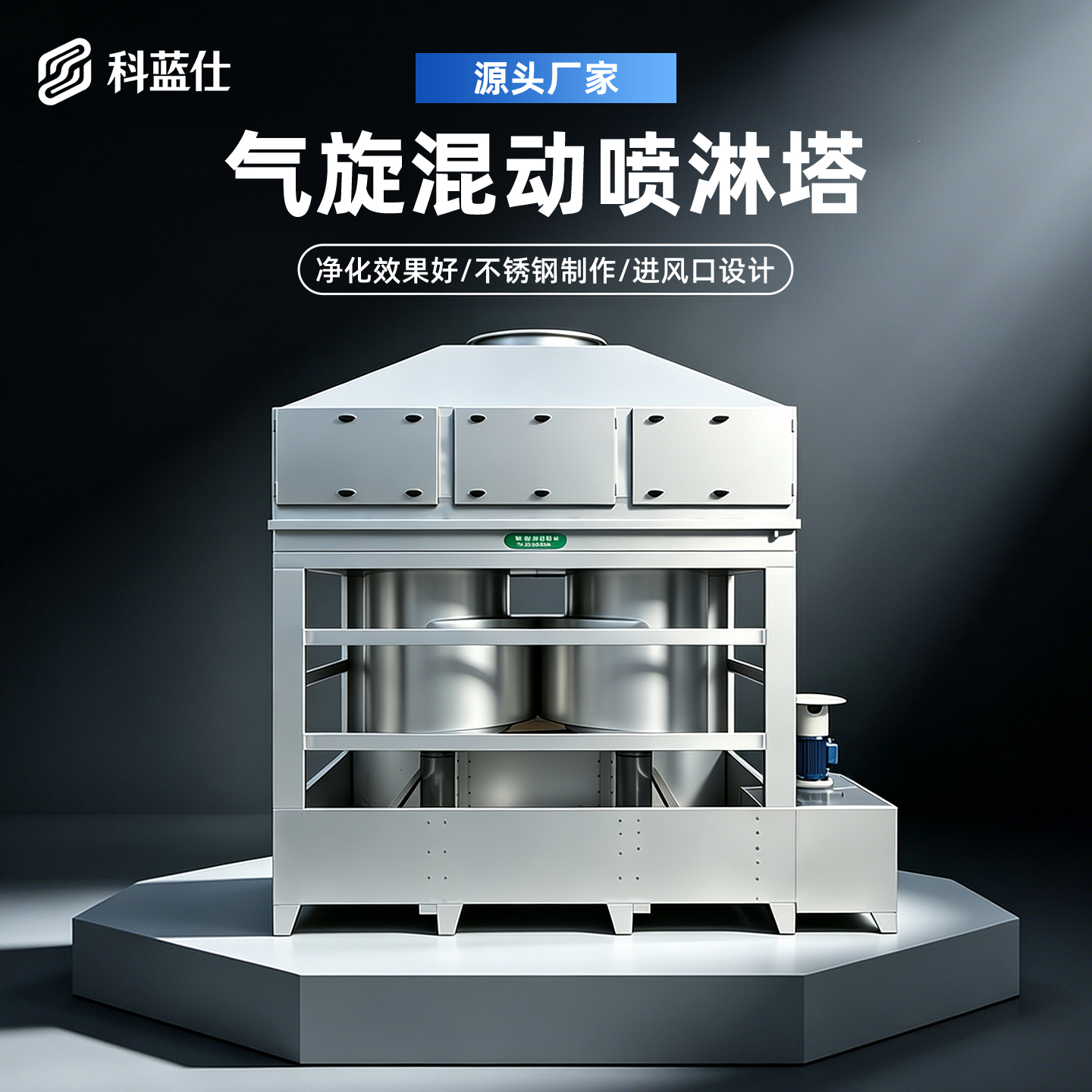
304 stainless steel: general industrial service, with boundaries
304 is often used in non-aggressive industrial duties and applications needing metal strength. It can be appropriate when chemistry and temperature are controlled, but acidic liquids, chlorides and certain cleaning chemicals can create risk. The complete wetted path must be evaluated rather than the shell alone.
316 stainless steel: additional resistance, not immunity
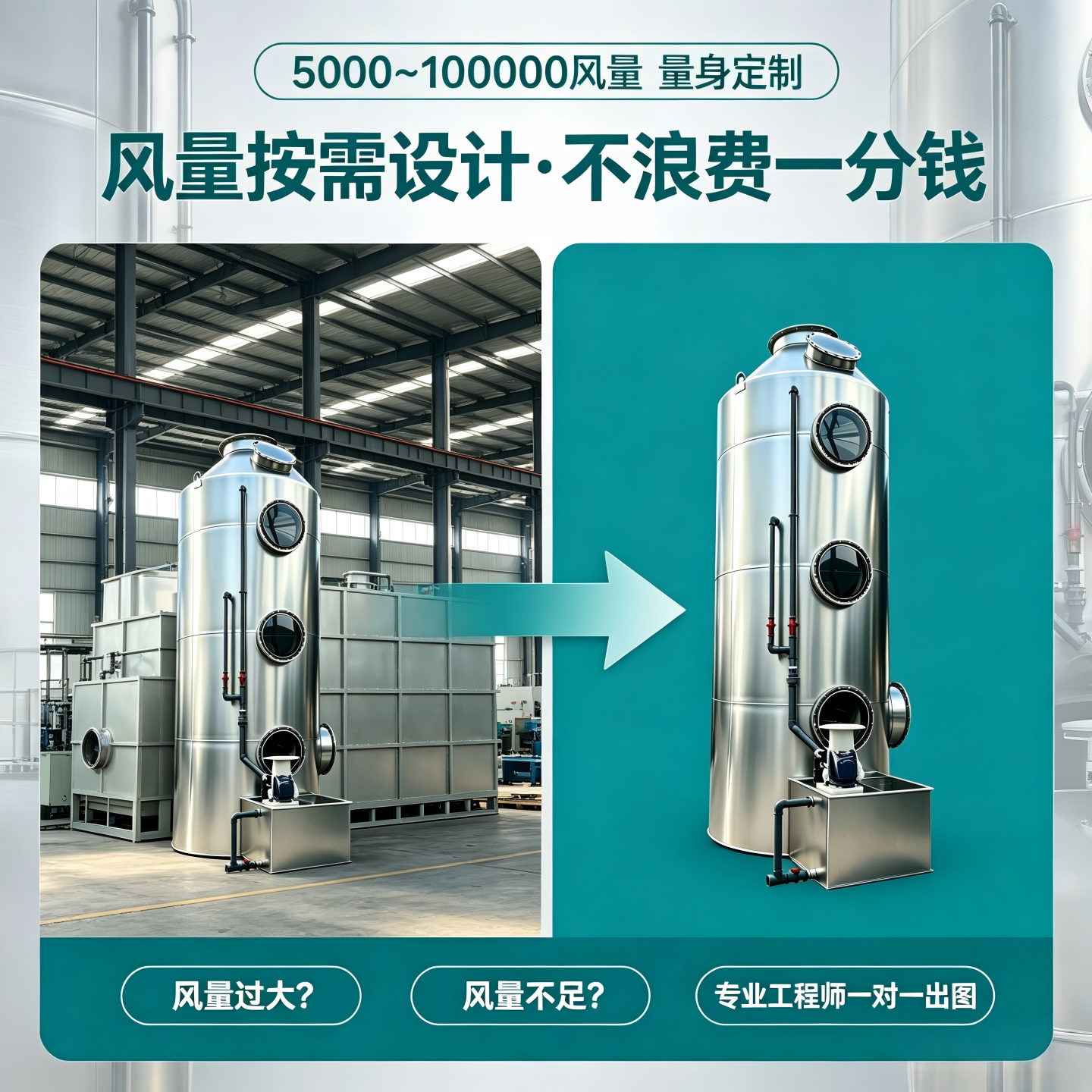
316 is often considered where chloride resistance is more important than in 304 service. It is still not a blanket answer for all chloride or acid conditions. Concentration, temperature, crevice locations, stagnant areas and welding details can all change durability.
Make the material decision traceable
| System component | What to specify |
|---|---|
| Tower and sump | Material, thickness, reinforcement and design pressure/vacuum. |
| Spray system | Header/nozzle material, pump casing, seal and flushing method. |
| Mist eliminator | Material, face velocity basis and access for cleaning. |
| External structure | Platform, fasteners, supports and outdoor protection. |
For a reliable quote, send the chemical list and operating envelope, then request a written statement of material assumptions. This protects the buyer from comparing towers that look similar but use very different wetted components.