Stainless Steel Dust Collector Selection Guide for Metal Processing
Stainless steel processing can release grinding dust, polishing powder, welding fume and cutting smoke in the same workshop. A single generic dust collector specification is often not enough. The system must match the process, particle behavior, safety review and maintenance plan.
This guide explains how PureAirTek evaluates stainless steel workshops for dust collection equipment selection. It is intended for fabrication shops, equipment distributors and plant engineers comparing cartridge collectors, baghouse collectors, hoods and ducted systems.
Stainless Steel Processing Has Mixed Air Pollutants
| Process | Main Air Pollutant | Design Focus |
| Grinding and deburring | Abrasive dust and sparks | Source capture, spark review and filter protection. |
| Polishing | Fine dust and buffing compound | Stable hood capture and frequent dust discharge. |
| Welding | Fine metal fume | High-efficiency filtration and worker breathing zone control. |
| Laser cutting | Fine smoke and oxide particles | Table extraction zones and cartridge filter area. |
Equipment Selection Logic
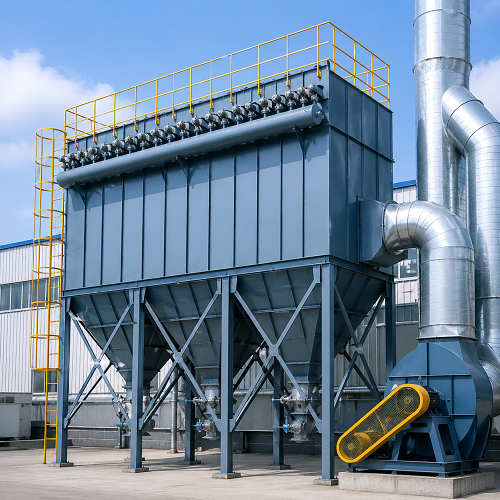
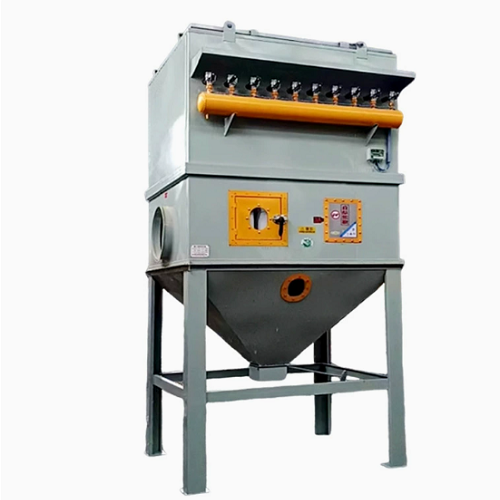
Cartridge dust collectors are often used for fine stainless fumes and cutting smoke because pleated filters provide high filtration area in compact equipment. Baghouse dust collectors may be better for larger airflow, heavier polishing dust or continuous production. For abrasive grinding, a pre-separator or spark control device may be needed before the final filters.
When stainless steel welding is involved, the capture method is critical. A collector cannot protect workers if fumes pass through the breathing zone before reaching the hood. Fixed hoods, extraction arms, downdraft tables or enclosure methods should be selected according to the workstation.
Why Material Details Matter
Stainless steel dust and fumes may include fine metal oxides. Different countries and customers may have strict worker exposure or housekeeping expectations. PureAirTek does not treat this as only an airflow question. The project review should include process type, material grade if available, dust temperature, spark condition, operating hours and filter maintenance access.
Recommended Review Table
| Review Item | What to Confirm | Reason |
| Process mix | Grinding, polishing, welding, cutting or mixed | Each source needs a different capture strategy. |
| Station count | Number of stations running at the same time | Prevents over- or under-sizing airflow. |
| Spark condition | Visible sparks, hot particles or dry dust accumulation | Determines whether spark control is required. |
| Filter access | Side removal, top access or maintenance platform | Improves long-term operation and filter replacement. |
| Dust discharge | Drum, drawer, screw conveyor or custom discharge | Important for clean and safe maintenance. |
Common Mistakes
- Using the same collector for welding fumes and heavy grinding dust without reviewing loading.
- Ignoring spark risk because the collector appears far from the workstation.
- Choosing airflow only from duct diameter instead of source capture requirement.
- Placing the collector where filters cannot be removed safely.
Related PureAirTek Equipment
For stainless steel workshops, PureAirTek may recommend cartridge dust collectors, baghouse dust collectors, grinding tables, extraction hoods and industrial exhaust fans. Send process photos, station layout and material information for a practical selection review.