Printing Ink VOC Emission Control
Introduction
Printing factories often face VOC control problems that are more complex than a simple exhaust fan and filter can solve. Solvent-based inks, varnishes, laminating adhesives, cleaning solvents and drying ovens can release organic vapor continuously during production. This guide explains VOC sources from printing inks, solvents, cleaning agents and drying ovens with practical control methods for B2B buyers, factory owners, engineering contractors, distributors and procurement managers who need a practical industrial solution.
PureAirTek approaches printing VOC treatment as an integrated engineering project. The final system may include exhaust collection hoods, duct balancing, pre-filtration, activated carbon adsorbers, zeolite concentration, RCO catalytic oxidizers, spray tower scrubbers or a combination of technologies. The correct choice depends on real VOC composition, airflow, concentration, temperature, humidity and operating schedule.
A strong printing VOC project should reduce odor complaints, support regulatory compliance, improve workshop air quality and control long-term operating cost. The equipment must fit the printing process, not only the industry name on the quotation.
Industry Background
Printing production can include gravure printing, flexographic printing, screen printing, packaging printing, label printing, coating, laminating and drying. Each process has different VOC characteristics. A gravure line may produce high solvent vapor from ink and dryer exhaust. A label printing workshop may have lower concentration but many scattered exhaust points. A packaging plant may combine printing, lamination and coating, creating mixed solvent conditions.
VOC control is important because solvent vapor can create odor, fire risk, worker exposure concerns and environmental compliance pressure. International buyers also increasingly review supplier environmental management. A printing plant that can show a stable exhaust treatment system and maintenance records is better prepared for customer audits.
Many older workshops rely on general ventilation. This can dilute odor inside the building but transfers VOCs outdoors without treatment and increases total exhaust volume. Modern systems focus on collecting concentrated exhaust near the source, reducing unnecessary air volume and treating VOCs with equipment selected for the real solvent load.
| Printing Process | Typical VOC Source | Common Treatment Direction | Key Engineering Risk |
|---|---|---|---|
| Gravure printing | Solvent ink and drying oven exhaust | Zeolite concentration + RCO or carbon adsorption | High solvent fluctuation and safety control |
| Flexographic printing | Ink station and dryer exhaust | Activated carbon or RCO depending on load | Duct balance and odor leakage |
| Screen printing | Ink, cleaning solvent and drying area | Carbon adsorption or localized collection | Scattered source capture |
| Lamination | Adhesive solvent vapor | RCO or combined adsorption oxidation | High concentration peaks |
| Packaging coating | Coating line and drying tunnel | Concentration + catalytic oxidation | Temperature and solvent compatibility |
Equipment Working Principle
Printing VOC treatment starts with source capture. Exhaust hoods, machine enclosures and dryer outlet ducts should capture solvent vapor before it spreads through the workshop. Better source capture allows lower total airflow and higher VOC concentration, which makes treatment more efficient.
After collection, the exhaust may pass through pretreatment. Pretreatment removes ink mist, paper dust, adhesive particles, oil mist or moisture that could block adsorbent media or damage catalyst. For some printing lines, dry filtration is enough. For humid or chemically complex exhaust, additional conditioning may be required.
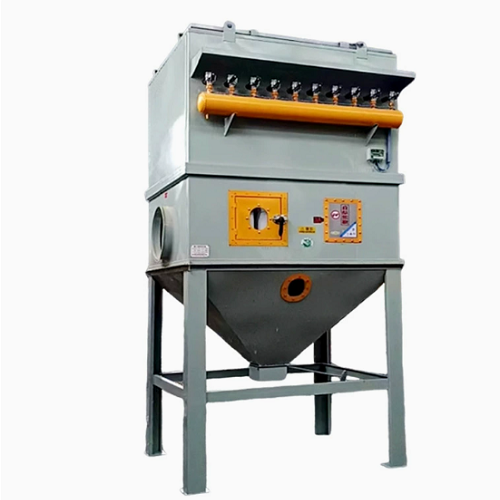
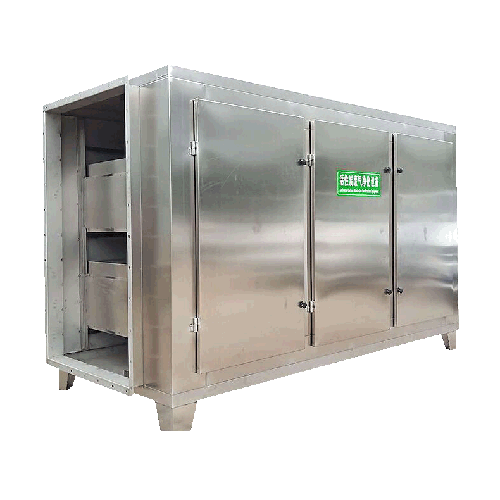
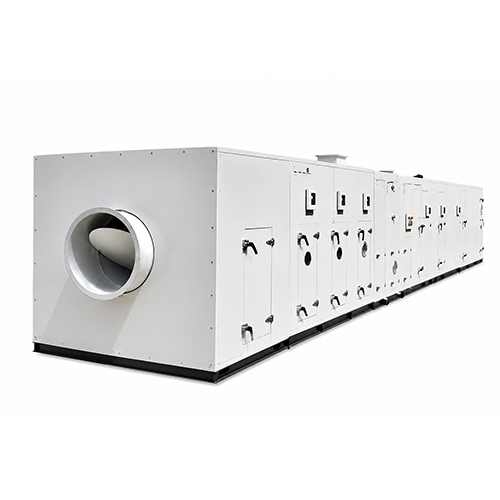
Activated carbon adsorbers remove VOCs by physical adsorption. VOC molecules attach to porous carbon surfaces until the carbon approaches saturation. This method is simple and effective for low to medium concentration exhaust, but carbon replacement or regeneration must be planned.
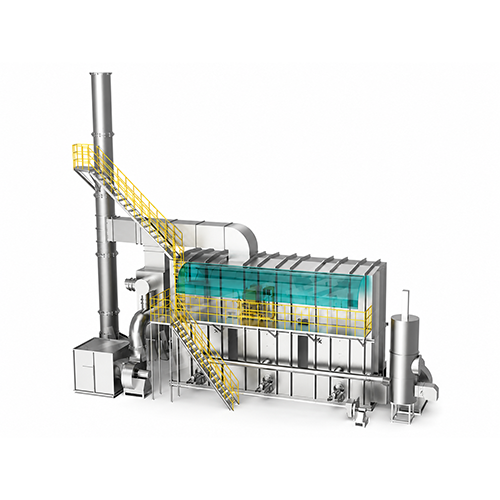
RCO catalytic oxidizers destroy VOCs through oxidation at a lower temperature than thermal oxidation. Large-volume, low-concentration printing exhaust is often first concentrated by zeolite or activated carbon media, then the concentrated stream enters the RCO reactor. The catalyst converts VOCs into carbon dioxide and water vapor when temperature, residence time and gas composition are suitable.
Typical Printing VOC Treatment Flow
| Step | Function | Buyer Checkpoint |
|---|---|---|
| Source capture | Collect VOCs at printing units, dryers and coating stations | Hood position, enclosure leakage and duct balance |
| Pretreatment | Remove dust, mist and particles | Filter grade, pressure drop and access |
| VOC adsorption | Capture low concentration solvent vapor | Carbon capacity and replacement plan |
| Concentration | Reduce oxidizer airflow for large exhaust volume | Concentration ratio and desorption stability |
| Catalytic oxidation | Destroy VOCs in concentrated exhaust | Catalyst temperature and removal efficiency |
| Monitoring | Track pressure, temperature and outlet condition | Records for compliance and maintenance |
Technical Specifications
Technical specifications should be built from measured production data. Airflow alone is not enough. A printing plant should provide machine type, number of lines, working width, ink type, solvent list, drying temperature, exhaust volume, VOC concentration, operating hours and local emission target.
| Parameter | Typical Industrial Range | Why It Matters |
|---|---|---|
| Airflow | 3,000-100,000+ m3/h | Determines duct size, fan capacity and equipment scale |
| VOC concentration | Low to medium, with possible peaks | Controls carbon life, RCO heat balance and safety design |
| Exhaust temperature | Ambient to elevated dryer exhaust | Affects adsorption, duct materials and heat recovery |
| Humidity | Project dependent | High humidity may reduce adsorption performance |
| Solvent composition | Ethyl acetate, alcohols, ketones, toluene or mixed solvents | Determines treatment method and catalyst compatibility |
| Removal efficiency | Often 80-98% depending on technology | Must match compliance target and monitoring method |
| Controls | PLC, temperature, pressure, alarms and interlocks | Supports stable operation and safe shutdown |
Selection Guide
The first selection step is to separate low concentration general workshop exhaust from concentrated process exhaust. Treating all air as one large stream often increases equipment cost and energy use. A better approach is to capture high-VOC exhaust from dryers and ink stations separately, then use general ventilation only where needed.
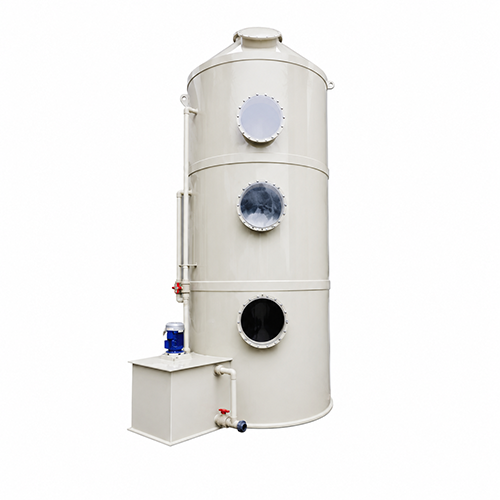
The second step is choosing between adsorption and oxidation. Activated carbon is practical for lower VOC load and intermittent operation. RCO is more suitable when solvent load is higher, operating hours are long or carbon replacement cost becomes excessive. Spray tower scrubbers may be used for soluble or odorous gas components but usually do not replace VOC adsorption or oxidation for solvent vapor.
The third step is pretreatment. Printing exhaust may carry paper fibers, pigment particles, ink mist or adhesive aerosol. These contaminants can block carbon beds, zeolite wheels or catalyst. PureAirTek reviews upstream contamination before selecting filters and maintenance access.
| Factory Condition | Suitable Solution | Reason |
|---|---|---|
| Low VOC load, intermittent printing | Activated carbon adsorber | Simple structure and moderate investment |
| Large airflow, low concentration dryer exhaust | Zeolite concentration + RCO | Reduces oxidation airflow and energy cost |
| High solvent use, continuous lines | RCO catalytic oxidation | Continuous destruction can reduce carbon replacement |
| Odor plus soluble gas | Scrubber + adsorption or RCO | Controls multiple pollutants in stages |
| Mixed process and workshop air | Separated collection strategy | Prevents oversizing and poor concentration |
Application Industries
Printing VOC treatment is used in flexible packaging, labels, decorative paper, plastic film printing, paper printing, carton printing, screen printing, textile printing, adhesive coating and lamination. Each industry has different product materials and solvent behavior. A packaging plant with multiple high-speed lines needs a different system from a small screen printing workshop.
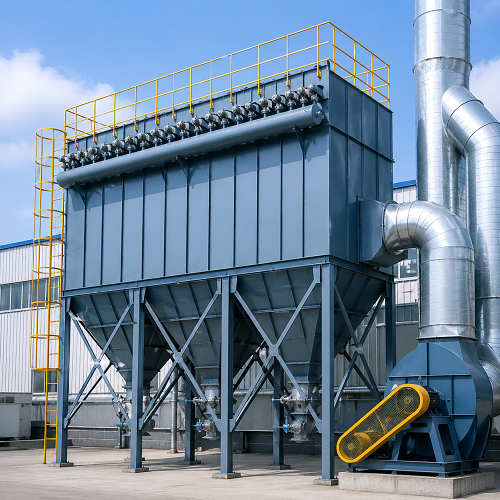
PureAirTek also supports combined projects where printing exhaust is only one part of factory air pollution control. A facility may also need cartridge dust collectors for trimming dust, spray tower scrubbers for odor or acid gas, and activated carbon adsorbers or RCO systems for VOC treatment.
Advantages and Benefits
A well-designed VOC system reduces outdoor odor, helps meet emission requirements and improves the image of the factory during customer audits. It can also reduce solvent accumulation in the workshop and support a cleaner production environment.
From a financial perspective, better source capture and correct equipment selection can lower fan power, carbon replacement frequency and heating energy. The cheapest equipment may become expensive if it treats too much clean air, requires frequent carbon replacement or lacks maintenance access.
| Benefit | Value for Printing Factory | Engineering Requirement |
|---|---|---|
| Odor control | Reduces complaints and improves site reputation | Good capture and adequate removal efficiency |
| Compliance support | Helps pass inspections and audits | Documented operating records |
| Lower operating cost | Reduces carbon, fuel and fan energy waste | Correct airflow and concentration design |
| Stable production | Less downtime from environmental issues | Reliable controls and maintenance access |
| Integrated project delivery | One supplier coordinates collection and treatment | Engineering review by experienced manufacturer |
Installation Considerations
Installation should begin with exhaust source mapping. Engineers should identify printing units, ink mixing areas, drying ovens, coating stations, cleaning stations and storage areas. Duct routes should avoid unnecessary length and sharp turns because pressure loss increases fan energy.
Fire and explosion safety are important in solvent printing. The system may require LEL monitoring, dilution air, explosion relief, flame arresters, grounding, interlocked shutdown and safe start-up logic. Local codes and insurance requirements should be reviewed before equipment fabrication.
Maintenance access must be included in layout. Operators need space to replace filters, inspect carbon beds, access valves, check sensors and service fans. PureAirTek recommends confirming platform, ladder and lifting space before delivery, especially for large RCO or carbon adsorption systems.
Maintenance Guide
Maintenance for printing VOC equipment depends on technology. Carbon adsorbers require pressure drop checks, carbon saturation monitoring, replacement planning and fire prevention. RCO systems require filter inspection, temperature trend review, valve maintenance, catalyst protection and safety interlock testing.
Operators should keep daily records of fan operation, pressure drop, temperature, carbon replacement, alarm history and production load. These records help identify whether odor or efficiency issues are caused by process changes, filter blockage, saturated carbon, catalyst problems or duct imbalance.
| Maintenance Task | Frequency | Purpose |
|---|---|---|
| Check filter pressure drop | Daily or weekly | Protects carbon media and RCO catalyst |
| Inspect carbon condition | Scheduled by VOC load | Prevents breakthrough and odor complaints |
| Review RCO temperature | Daily | Confirms catalytic oxidation stability |
| Clean ducts and hoods | Monthly or by condition | Maintains capture efficiency |
| Test safety interlocks | Quarterly or by site policy | Supports safe solvent exhaust treatment |
| Record outlet observations | Daily | Creates troubleshooting baseline |
Common Problems and Solutions
One common problem is odor at the outlet even when the equipment is running. Causes include saturated carbon, low RCO reaction temperature, bypass leakage, poor source capture or changed solvent composition. The solution is to compare current operation with commissioning data.
Another problem is high carbon replacement cost. This often happens when a carbon system treats too much air or receives higher VOC concentration than expected. Improving source separation or upgrading to concentration plus RCO may reduce lifecycle cost.
High pressure drop can come from paper dust, ink mist, adhesive particles or overloaded filters. If filters are removed to reduce pressure drop, the downstream system may be damaged. A better solution is to improve pre-filter selection and maintenance access.
| Problem | Likely Cause | Solution |
|---|---|---|
| Outlet odor | Saturated carbon or low oxidation temperature | Replace carbon, check RCO temperature and inspect bypass |
| High operating cost | Oversized airflow or frequent carbon replacement | Optimize source capture and review RCO option |
| Unstable airflow | Duct imbalance or fan issue | Rebalance dampers and inspect fan performance |
| Filter blockage | Paper dust, ink mist or adhesive particles | Upgrade pretreatment and cleaning schedule |
| Temperature alarm | VOC surge or poor dilution | Check production change, LEL monitoring and control logic |
Practical Industrial Example
A flexible packaging factory with three printing lines may have strong odor near the exhaust outlet during peak production. The original system uses activated carbon only, but carbon replacement is frequent because dryer exhaust contains more solvent than expected. After reviewing airflow and solvent data, the plant separates dryer exhaust from general workshop ventilation and applies concentration plus RCO for the main solvent stream. Carbon adsorption remains for smaller intermittent sources. This reduces carbon replacement pressure and improves treatment stability.
A label printing workshop may have lower concentration but many small sources. In this case, PureAirTek may recommend better local collection and a compact activated carbon adsorber rather than a large oxidation system. The correct solution depends on actual VOC load, operating hours and compliance target.
Detailed Engineering Review and Buyer Checklist
Before buying printing VOC treatment equipment, the buyer should prepare a process list, solvent safety data sheets, ink and adhesive consumption, machine exhaust points, airflow estimates, VOC concentration data, operating hours and layout drawings. If concentration data is not available, short-term sampling should be considered before final design.
The quotation should specify equipment airflow, pressure drop, treatment efficiency, media quantity, fan power, control system, safety devices, materials, maintenance access and spare parts. Buyers should also ask how the supplier calculates carbon replacement, RCO heating demand or concentration ratio.
Commissioning should include airflow measurement, pressure drop record, inlet and outlet VOC sampling, temperature verification, alarm test and operator training. Dongguan Kelong Environmental Technology Co., Ltd. supports PureAirTek with manufacturing and engineering experience for industrial air pollution control equipment used in printing, coating, furniture and packaging industries.
Internal Links for Topic Cluster
Related product pages: Activated Carbon Adsorbers, RCO Catalytic Oxidizers, Spray Tower Scrubbers, Industrial Air Pollution Control Equipment.
Related application pages: Printing Industry VOC Control, Paint Booth VOC Treatment, Furniture Manufacturing VOC Treatment.
Related knowledge articles: Industrial VOC Treatment Methods Explained, How to Select VOC Treatment Equipment, Activated Carbon Adsorber Working Principle, How Does an RCO System Work?.
FAQ Section
1. What VOC treatment equipment is best for printing factories?
The best equipment depends on airflow, VOC concentration, solvent composition and operating hours. Activated carbon is suitable for lower loads, while RCO or concentration plus RCO is often better for continuous solvent printing lines.
2. Can activated carbon treat printing exhaust?
Yes. Activated carbon can adsorb many printing solvents, but carbon replacement or regeneration must be planned. High VOC load may make carbon-only systems expensive to operate.
3. When should a printing plant consider RCO?
RCO should be considered when production is continuous, solvent load is significant, carbon replacement is frequent or the plant needs stable VOC destruction rather than only adsorption.
4. Why does printing exhaust still smell after treatment?
Possible causes include saturated carbon, insufficient reaction temperature, bypass leakage, poor capture, filter blockage or changed solvent composition. Operating records help identify the cause.
5. What information is needed for a quotation?
PureAirTek needs machine type, airflow, solvent list, VOC concentration, exhaust temperature, operating hours, layout, emission target and any existing treatment equipment information.
6. Is general workshop ventilation enough for VOC compliance?
Usually no. General ventilation dilutes VOCs but does not remove them. Compliance often requires source capture and proper exhaust treatment equipment.
7. How can printing factories reduce operating cost?
Improve source capture, separate high-concentration exhaust, avoid treating unnecessary clean air, maintain filters, monitor carbon condition and select the correct treatment technology.
Conclusion
Printing Ink VOC Emission Control requires careful review of printing process, solvent use, exhaust collection, equipment technology and long-term maintenance. A reliable system should solve real buyer questions: how to select equipment, how it works, how to reduce cost, how to improve removal efficiency and how to avoid common failures.
PureAirTek provides activated carbon adsorbers, RCO catalytic oxidizers, spray tower scrubbers and integrated industrial air pollution control systems for printing factories and related manufacturing plants.
Request a Quote CTA
To request a printing VOC treatment proposal, contact PureAirTek with your printing process, airflow, solvent list, VOC concentration, exhaust temperature, operating schedule and compliance target. Dongguan Kelong Environmental Technology Co., Ltd. can support customized equipment manufacturing and engineering documentation for global printing and packaging VOC control projects.
Request a Quote from PureAirTek for printing exhaust treatment, activated carbon systems, RCO catalytic oxidizers and complete industrial VOC control equipment.