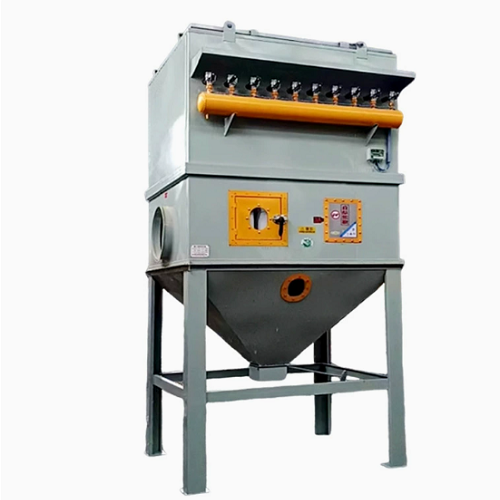
Ceramic Powder Dust Collection Equipment Guide
Ceramic powder handling can create fine, abrasive dust at mixing, transfer, milling, screening, pressing and bag-dumping points. The collection system needs to preserve product containment while limiting wear, filter loading and cleanup labor.
Map dust sources by transfer step
Bag opening, mixer charging, conveyor transfer and screen discharge often require local enclosures or receiving hoods. The goal is to capture dust at the drop point before it disperses. General roof exhaust may dilute the room but will not usually control a high-energy powder transfer.
Consider particle behavior
| Condition | Design implication |
|---|---|
| Very fine dry powder | Requires stable hood capture and suitable fine filtration. |
| Abrasive material | Review inlet wear, duct elbows, hopper and discharge equipment. |
| Hygroscopic or moisture-sensitive powder | Control air leakage, condensation and cleaning air quality. |
| Valuable product powder | Plan sealed recovery and avoid cross-contamination. |
Collector and duct details matter
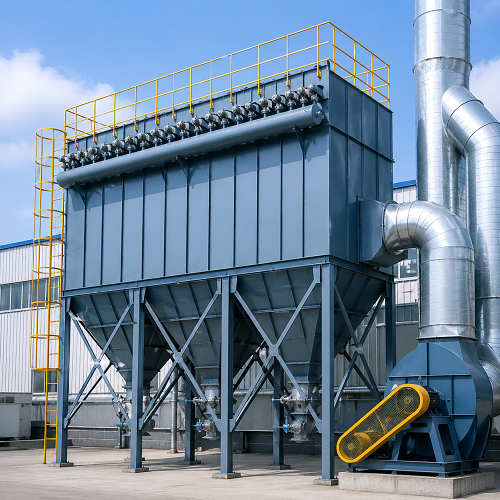
A cartridge or baghouse collector may be considered based on dust loading, particle size and cleaning requirements. Keep duct runs practical for conveying dust, include access to high-wear points, and provide hopper discharge that does not let material accumulate. A filter pulse system also requires clean, dry compressed air and a maintenance plan.
Information for design
Provide powder name, bulk behavior, particle size range, machine list, operating combinations, material safety information, indoor layout, desired recovery method and any explosion-safety assessment. This lets the system be sized for real production rather than a generic plant airflow.