Dust Collection for Steel Fabrication Shops: Layout and Zoning Guide
A steel fabrication shop rarely has one uniform exhaust source. Welding, grinding, laser cutting, material handling and occasional repair work create different loads and operating patterns. The system layout should group compatible processes while keeping high-risk or high-loading sources from compromising other branches.
Map the shop before choosing central or local collection
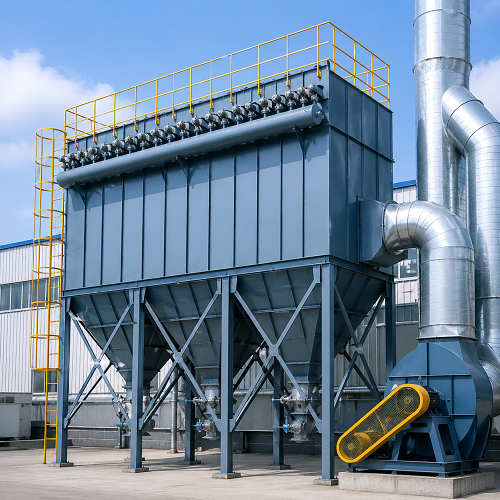
Mark fixed machines, changing work bays, crane paths, doors, makeup-air openings and locations where several stations run at once. A central system can work well for stable fixed equipment. Dedicated or mobile collectors are often better for intermittent work and large fabricated assemblies. The answer can be a mixed layout rather than one large collector.
Create useful extraction zones
| Zone | Design priority |
|---|---|
| Welding bays | Capture close to the arc and flexibility for changing work. |
| Grinding area | Abrasion, sparks, robust hoods and safe dust discharge. |
| Laser/plasma cutting | Machine table extraction, hot-particle management and zoning. |
| Assembly area | Local or mobile capture for temporary work. |
Balance the system for simultaneous demand
Do not add every machine’s maximum airflow unless they truly run together. Define realistic operating combinations, then provide dampers or automatic zone control where the process supports it. Every branch needs enough conveying velocity and the fan must cover the full resistance at the design condition.
Plan for maintenance and future change
Place collectors where filters and hoppers can be serviced safely. Include access doors, clear duct routes and space for future branches. Track differential pressure and inspect hoods after layout changes. A shop drawing, process list, work hours and machine photos are the fastest way to develop a credible collection concept.