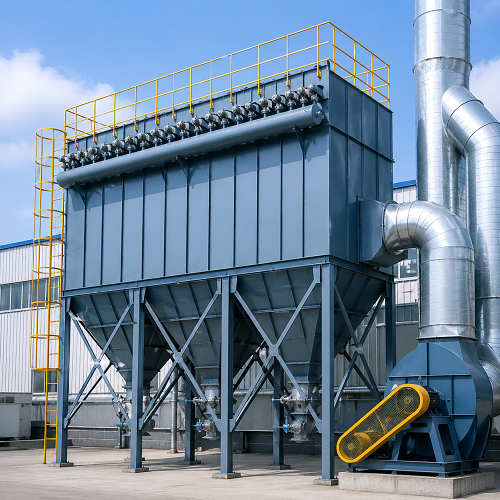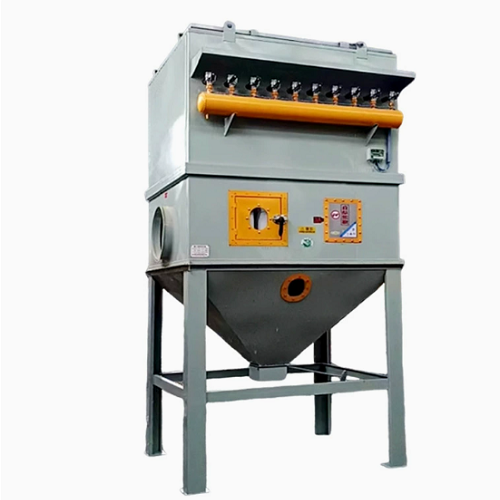
Metal Grinding Dust Collector for Abrasive Operations
Grinding exhaust carries abrasive particulate, wheel debris and often sparks. Compared with welding fume, the particles are typically heavier and the collector inlet, hopper and ductwork face greater wear. A correct design deals with capture, abrasion and fire risk together.
Design around the grinding workstation
Bench grinding, belt grinding, pedestal wheels and robotic grinding each need different hoods. The hood should pull dust away from the operator without interfering with the workpiece. Enclosing the wheel or adding side panels can improve capture more effectively than simply increasing fan size.
Protect the downstream collector
- Use a suitable pre-separation or spark-management approach when the process produces hot or coarse material.
- Choose duct material, elbows and inlet geometry with abrasion in mind.
- Provide a hopper discharge method that does not allow dust to build up and choke airflow.
- Evaluate combustible-dust and metal-dust risks for the specific material, especially aluminum and magnesium.
Airflow calculation inputs
Determine hood dimensions, wheel enclosure, capture direction, cross-drafts, branch length and the number of operating stations. Fan selection must include the resistance of hoods, ducts, pre-separator, collector and final outlet. A quote based only on the motor horsepower cannot show whether the system will capture at the source.
Commission and maintain for abrasive duty
Inspect high-wear points, hopper discharge and filter condition on a planned interval. Differential-pressure readings show when cleaning is effective; visible dust around a hood often indicates an airflow or positioning problem. Supply the wheel type, metal processed, work pattern, existing hood photos and any spark observations so the proposed system matches real grinding duty.