Laser Cutting Dust Collector Selection Guide
Laser cutting produces a fine smoke and particulate stream that is strongly affected by material, cutting gas, table design and the machine’s extraction zones. A collector should be selected around the cutting table and duty cycle, not from a generic “laser fume” airflow number.
Separate laser cutting from plasma cutting
Laser cutting often creates finer smoke; plasma cutting can add a hotter, heavier and more spark-prone load. Material coatings also change the exhaust. Galvanized, painted or oily stock may require a different assessment from clean carbon steel. Record material mix and maximum plate thickness before selecting media and protection stages.
Capture is built into the machine table
Most systems use zoned extraction under the cutting bed. The active zone must maintain adequate pull while inactive zones remain closed, otherwise the fan capacity is spread across the full table and pickup drops. Verify whether the machine supplier provides zone information and required static pressure.
Collector configuration
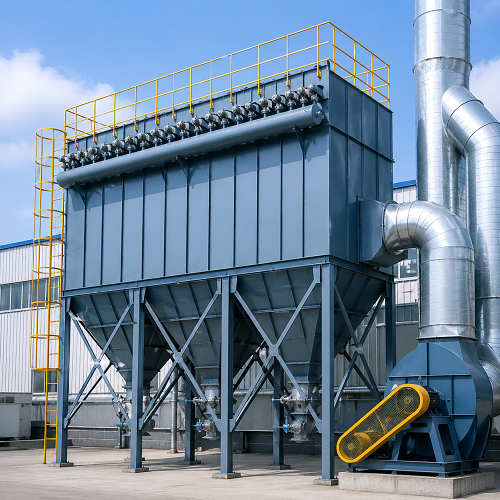
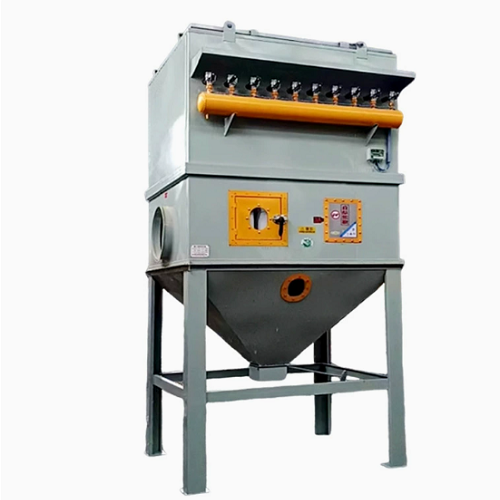
- Use a cartridge collector or suitable fine-filtration system when the dust is dry and the loading has been assessed.
- Consider spark management, robust inlet design and safe dust discharge where hot particles may enter the duct.
- Allow service clearance for cartridges, hopper removal and access to the filter-cleaning controls.
Data needed for a selection
| Input | Why it changes the design |
|---|---|
| Table dimensions and zone layout | Sets airflow pattern and duct connection requirements. |
| Laser power and duty cycle | Indicates fume generation and operating profile. |
| Material/coating mix | Changes dust chemistry and media suitability. |
| Indoor/outdoor discharge | Influences final filtration, noise and duct routing. |
Ask for a stated design airflow, pressure-drop basis and dust-handling arrangement rather than a collector model name alone.